
A canceled load because a certificate was late. A broker who needs higher liability limits before dispatch. A right-turn accident that turns into a six-figure claim. Trucking insurance is not just another bill attached to your authority. It is what keeps one bad day from putting your truck, contracts, and cash flow at risk.
For a carrier, the right policy has to do more than meet a federal filing requirement. It has to match the freight you haul, the roads you run, the equipment you own, and the customers asking for proof of coverage. That is why a dry van owner-operator, a hot-shot carrier, and a fleet hauling cars should not be quoted like the same business.
What Trucking Insurance Is Really Protecting
Your operation has several exposures moving at once. There is the truck itself, the public around it, the cargo in the trailer, and the business income that stops when equipment is down or an authority cannot run. Good coverage starts with seeing those exposures clearly rather than choosing a policy based on the lowest monthly payment.
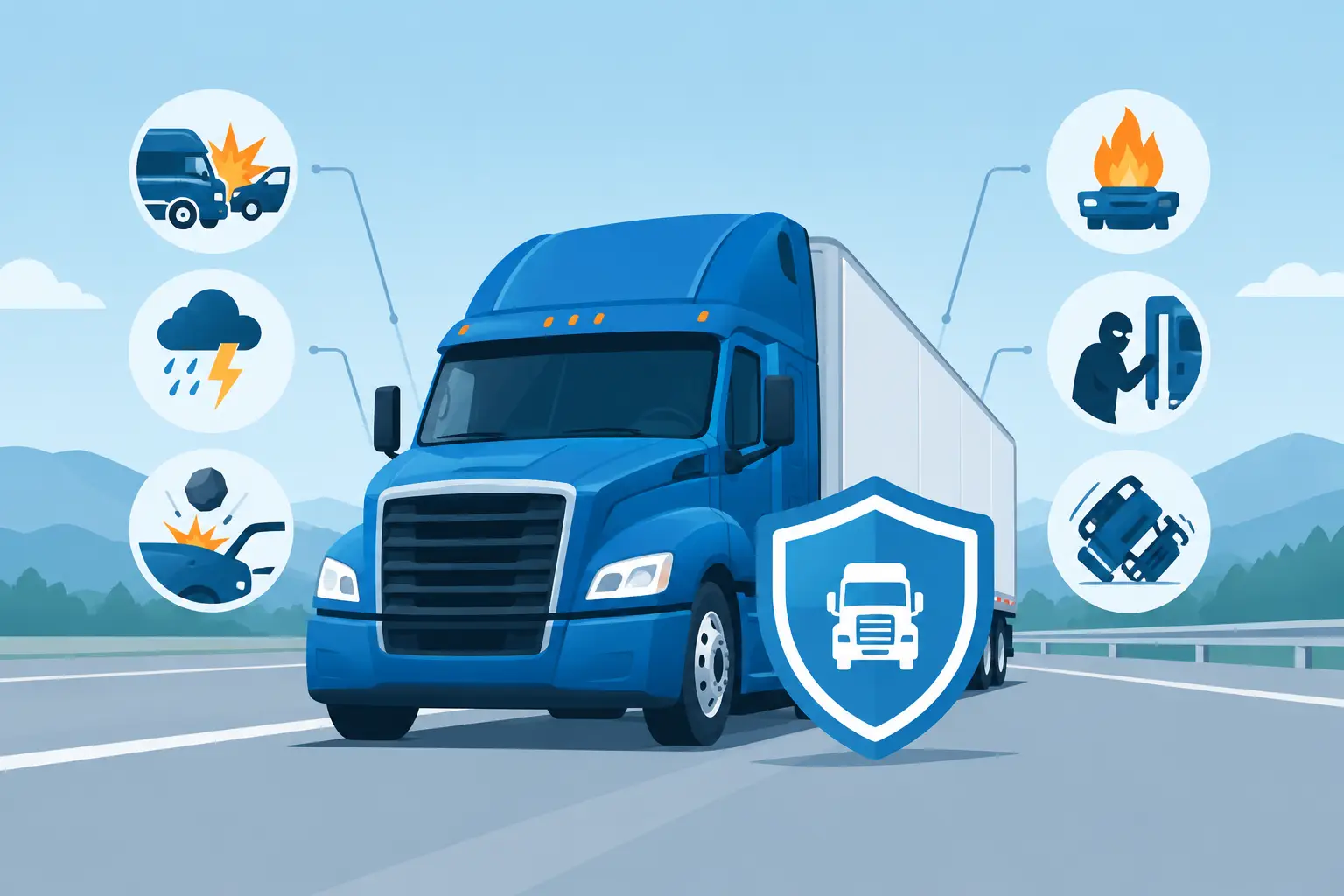
Primary auto liability is the foundation for most for-hire carriers. It responds when your truck causes bodily injury or property damage to another party. Picture a loaded tractor-trailer making a tight right turn and striking a passenger vehicle. The claim can involve vehicle damage, medical bills, legal costs, and lost wages. Those costs can move fast, which is why required limits and customer contract requirements matter.
Motor truck cargo coverage protects the freight you are responsible for hauling, subject to the policy terms and exclusions. A reefer failure, a load shift, theft from a secured lot, or water damage after an accident can all create a cargo claim. The limit should reflect the value of the loads you actually accept, not the value of an average shipment on a good day. Hauling one high-value load without enough cargo protection can create a problem that follows the business long after delivery.
Physical damage coverage addresses damage to your own tractor, trailer, or other scheduled equipment from collision, theft, fire, vandalism, and certain weather events. If there is a loan or lease on the truck, the lender will usually require it. Even when it is not required, the practical question is simple: could you replace or repair that equipment quickly enough to stay in business if it were totaled tomorrow?
Other coverages may belong in the conversation depending on your work. General liability can be required for customer premises, loading activities, and contracts. Non-trucking liability may apply when an owner-operator is using a truck outside of dispatch. Trailer interchange is important when you pull trailers owned by someone else. Uninsured and underinsured motorist coverage, roadside-related exposures, and specialized coverage for towing, auto hauling, dump trucks, or hazmat can also change the policy structure.
Trucking Insurance Requirements Are Only the Starting Point
Federal and state rules establish minimum requirements, but the market often demands more. A broker, shipper, warehouse, or load board may ask for a certain liability limit, cargo limit, additional insured status, waiver of subrogation, or a specific certificate format. If your policy cannot meet the requirement, the load may go to the next carrier.
This is especially important for new MC authorities. New ventures often have limited insurance history, fewer operating records, and a smaller selection of carriers willing to quote. Rates may be higher during the first year, and an incomplete application can slow the process down. Still, speed should not mean guessing. Your insurer needs accurate information about your drivers, equipment, radius of operation, commodities, and prior losses.
A fast certificate of insurance matters just as much once you are active. A COI should be easy to request and issued accurately, because a name mismatch, missing endorsement, or wrong limit can hold up a pickup. Insurance service is operational service when your truck is waiting on dispatch.
Your Freight Changes the Coverage Conversation
The commodity you haul is one of the biggest rating and underwriting factors. General dry freight is not rated the same as refrigerated food, pharmaceuticals, automobiles, household goods, scrap metal, oversize equipment, or construction material. Some loads have higher theft exposure. Others have spoilage risk, loading risk, hazardous-material concerns, or unusually high cargo values.
Be direct about what you haul and what you might haul next quarter. Saying you run general freight when you plan to add reefer loads or auto transport can leave you with a policy that does not fit the work. The same applies to operating radius. Local dump work, regional routes, and 48-state long-haul operations carry different risk patterns and should be described correctly from the start.
What Drives the Cost of Trucking Insurance
There is no honest flat answer to what trucking insurance costs. Two carriers with the same truck can see very different premiums because insurers price the complete risk, not just the unit number.
The biggest factors usually include driver experience and motor vehicle reports, loss history, garaging location, operating radius, equipment value, commodities, years in business, safety controls, and coverage limits. A new authority with a newer truck, a young driver, and nationwide operation will often look different to an insurer than an experienced owner-operator running a defined regional lane with a clean record.
Deductibles are another trade-off. A higher physical damage deductible can reduce premium, but it also means more out-of-pocket cost after a loss. That may make sense for a carrier with cash reserves and a lower-value unit. It can be a bad fit for a business where a $5,000 repair bill would disrupt payroll, fuel purchases, or the next truck payment.
The lowest quote is not always the least expensive policy. Check the carrier’s financial strength, the cargo limit, deductibles, excluded commodities, payment terms, cancellation terms, and how claims are handled. A cheap policy that cannot satisfy a customer’s requirements or leaves a gap in a real loss can cost more than the savings ever justified.
How to Build a Policy That Fits Your Operation
Start with a clear picture of the business you run now. List each power unit and trailer, the drivers behind the wheel, your primary lanes, the commodities you haul, and the maximum cargo value you may carry. Include leased-on drivers, owner-operators under your authority, and equipment you plan to add soon. Incomplete information may produce a quick quote, but it can create endorsement issues later.
Next, separate what is legally required from what your customers require and what the business can realistically absorb. Your authority may need a specific liability filing. A broker may require $100,000 in cargo coverage. Your lender may require physical damage. Then there is the risk you choose to protect even when no one requires it, such as a trailer you cannot afford to replace.
Finally, review the policy before binding. Confirm every VIN, driver, garaging address, commodity, and operating radius. Ask what happens if you add a driver over the weekend, buy another truck, or need a COI after hours. Those details are not paperwork trivia. They determine whether your insurance keeps up with the way trucking actually works.
Keep Insurance Current Between Renewals
Many insurance problems start after the policy is issued. A carrier adds a driver without reporting it, changes from local work to interstate runs, starts hauling a new commodity, or sells a truck that remains on the policy. The operation changes, but the coverage does not.
Report material changes promptly. That gives your agent time to update the policy, confirm the new exposure is acceptable, and issue documents your customer may need. It also prevents surprises during a claim or audit. Keep copies of driver documents, lease agreements, maintenance records, bills of lading, and photos of equipment in an organized place. When something goes wrong, clean records save time.
Renewal deserves the same attention. Do not wait for a renewal offer and assume it is your only option. Losses, market conditions, driver changes, equipment upgrades, and new lanes can all affect pricing. Shopping the policy annually with accurate operating information may reveal a better fit, but changing carriers is not automatically the right move. A stable policy with strong service and coverage that fits your freight can be worth protecting.
When a Claim Happens, Protect the Business First
After an accident, cargo loss, theft, or damage event, focus on safety and documentation. Take photos when it is safe, gather contact information, preserve bills of lading and load details, notify dispatch and the appropriate parties, and report the claim promptly. Do not promise payment or admit fault at the scene. Facts matter, and early reporting helps the carrier investigate while information is fresh.
A good insurance partner should help you understand what the policy requires and what information the adjuster will need. At MC Truck Insurance, we are built by truckers for truckers, so we understand that a claim is not an abstract file. It can mean a missed delivery, a parked truck, and a customer relationship on the line.
The best time to fix a coverage gap is before the truck is loaded. Ask direct questions, give honest details about your operation, and choose protection that lets you accept the work you want without betting the business on one bad mile.