A dump truck can be parked for a day and still cost you money. A damaged tailgate, a right-turn collision, a cracked windshield, or a jobsite claim can put a truck out of service when the work is waiting. That is why dump truck insurance needs to match the way you actually run – local routes, heavy loads, jobsite access, changing drivers, and contracts that may require proof of coverage before you can roll.
Dump operators do not face the same exposure as a dry van running terminal-to-terminal freight. You may haul gravel one day, demolition debris the next, then move dirt, sand, asphalt, or landscaping materials for a contractor. Your insurance should reflect that reality, not force your business into a generic trucking policy built for somebody else’s operation.
Why Dump Truck Insurance Is Different
Dump trucking combines commercial driving risk with construction-site risk. Trucks often operate in tight yards, active work zones, unpaved roads, quarries, and crowded city streets. Backing, turning, loading, unloading, and raising the bed all create exposures that an underwriter needs to understand.
The details matter. A single-axle dump truck doing local landscaping work may be rated differently from a tri-axle or quad-axle truck hauling aggregate across county lines. A side dump running highway projects can have a different risk profile than an end dump moving demolition material. Your radius, garaging location, annual mileage, driver history, vehicle value, and the materials you haul all affect the coverage options and premium.
This is also why the cheapest quote is not always the best quote. A policy can look affordable until a contractor asks for a certificate with additional insured wording, a lender requires physical damage coverage, or a claim reveals an exclusion you did not expect. Good insurance is not just a price. It is coverage that can respond when the truck, contract, and jobsite are all on the line.
The Core Coverage for a Dump Truck Operation
Primary Auto Liability
Primary auto liability is the foundation of dump truck insurance. It can pay for bodily injury and property damage you cause to others in a covered accident, subject to policy limits and terms.
Picture a loaded truck making a right turn near a construction entrance. A passenger vehicle moves into the truck’s blind spot and is struck. The resulting injury and vehicle-damage claim can quickly exceed what a small business can pay out of pocket. Primary liability is designed for that kind of road exposure.
The limit you need depends on state requirements, your operating authority, the commodities you haul, and the contracts you sign. Many contractors, brokers, and public works projects require specific limits before awarding work. Do not assume that meeting a minimum legal requirement automatically meets your customer’s insurance requirement.
Physical Damage
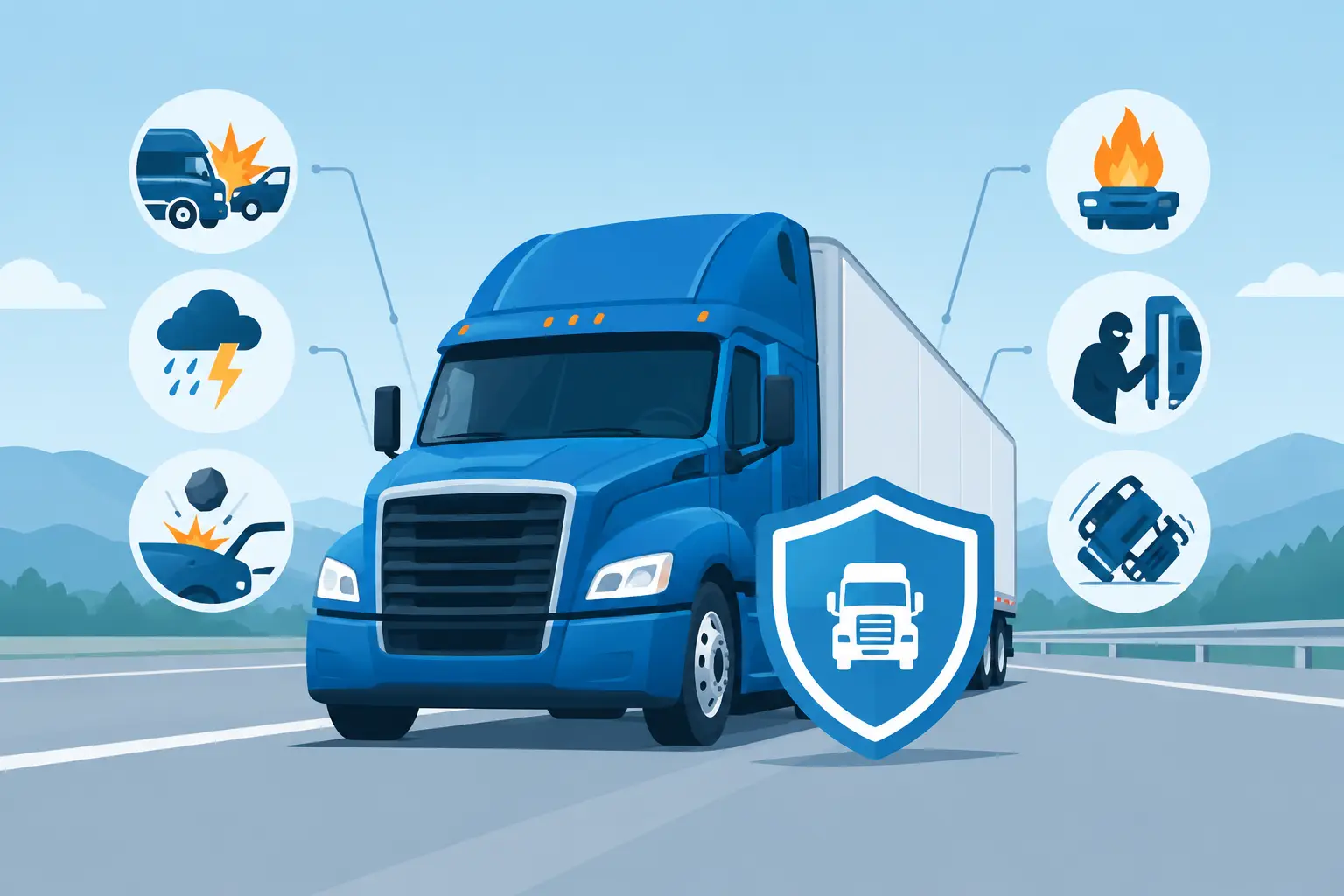
Physical damage helps protect your own truck, usually through collision and comprehensive coverage. Collision may apply after an impact with another vehicle or object. Comprehensive may respond to certain non-collision losses, such as theft, vandalism, fire, hail, or an animal strike.
For a financed dump truck, the lender will often require this coverage. Even when a truck is paid off, consider the cost and downtime of replacing it. A lower premium can be appealing, but carrying a large deductible means your business needs enough cash available to get repaired and back on the road after a loss.
General Liability
General liability addresses business-related injuries or property damage that do not arise directly from operating the truck on the road. For dump operators, that can include a visitor injury at your yard or certain jobsite-related allegations.
General liability and auto liability are not interchangeable. If your truck damages a customer’s property while being driven, the auto policy is usually the first place to look. If an incident happens away from the driving operation, general liability may be more relevant. The facts matter, and policy language matters.
Motor Truck Cargo
Cargo coverage can be useful when you are responsible for materials you haul for someone else. But dump trucking requires a closer conversation than many freight operations. Gravel, sand, dirt, asphalt, waste, debris, and recycled material can be treated differently by carriers, and some commodities may be excluded or limited.
Ask clear questions: Who owns the material? When does your responsibility begin and end? Is the load covered while in transit only, or while loading and unloading? Does the contract make you responsible for a rejected load or contamination issue? Do not buy cargo coverage simply because someone says every truck needs it. Buy it when your work and contracts create a real cargo exposure.
Coverage Gaps That Can Hurt a Dump Business
A standard package may not cover every risk tied to a dump operation. The right additional protection depends on what you haul and where you work.
If you run projects involving fuel, chemicals, contaminated soil, or certain waste materials, pollution liability deserves a serious discussion. A spill can create cleanup costs that go far beyond the value of the load. Likewise, if you own loaders, skid steers, trailers, tools, or other equipment, inland marine coverage may be worth considering because those assets are not always fully protected under an auto policy.
Workers’ compensation is another major piece for businesses with employees. Dump work is physical, and the risk is not limited to driving. A driver can be injured while climbing into a cab, securing a tarp, inspecting equipment, or working around a loading area. State rules vary, but operating without the required coverage can put contracts and your business at risk.
An umbrella or excess liability policy may make sense when you work on larger jobs, carry higher-value contracts, or need limits above your underlying auto and general liability policies. It adds cost, but one severe accident can make higher limits look very different after the fact.
What Insurers Need to Quote You Correctly
Getting a usable quote starts with accurate information. Guessing at your operation can lead to a policy that is priced wrong, issued wrong, or difficult to defend when a claim occurs.
Be ready to provide your vehicle details, including VINs, years, values, and whether the trucks are financed. Insurers will also want driver information, loss history, operating radius, garaging address, anticipated mileage, and the types of materials you haul. If you use leased operators, seasonal drivers, or owner-operators, say so early.
Your contracts can be just as important as your equipment list. A paving company, general contractor, municipality, or quarry may require a certificate of insurance, waiver of subrogation, additional insured status, or higher liability limits. Those requests should be reviewed before you commit to the job. A certificate confirms insurance information, but it does not automatically change coverage that is not already in your policy.
How to Keep Dump Truck Insurance Costs Under Control
You cannot control every rate increase, especially when claim severity and repair costs rise across the industry. You can control how clearly your business is presented to the insurance market.
Start with driver quality. Clean motor vehicle records, stable experience, documented hiring standards, and prompt reporting of driver changes can improve your profile over time. Keep maintenance records, inspect trucks consistently, and address damaged lights, tires, tarps, brakes, and backup cameras before they become part of a loss.
Telematics and dash cameras may also help, depending on the carrier and your operation. They are not a guaranteed discount, and they require follow-through. But clear evidence can be valuable when the facts of an accident are disputed.
Review your policy before renewal, not after it renews. If your fleet changed, your radius expanded, a truck was sold, or you moved into new materials or job types, your agent needs to know. Shopping with clean, current information gives you a better chance of finding a carrier that fits the business you run now.
A Policy Should Support the Job, Not Slow It Down
Dump trucking moves fast. A contractor may need a certificate before first light, a new truck may need to be added before it leaves the yard, and an accident may require immediate help while your driver is still at the scene. Service is part of the coverage decision.
MC Truck Insurance is built by truckers, for truckers. That means looking beyond a generic application and asking practical questions about your routes, equipment, drivers, hauling contracts, and growth plans. The goal is straightforward: help you find coverage that protects the work without treating your operation like just another account number.
Before your next renewal or new job, pull out your current policy, your vehicle list, and the insurance requirements in your contracts. A short review now can prevent a costly surprise when the truck is loaded, the crew is waiting, and there is no time left to fix a coverage problem.