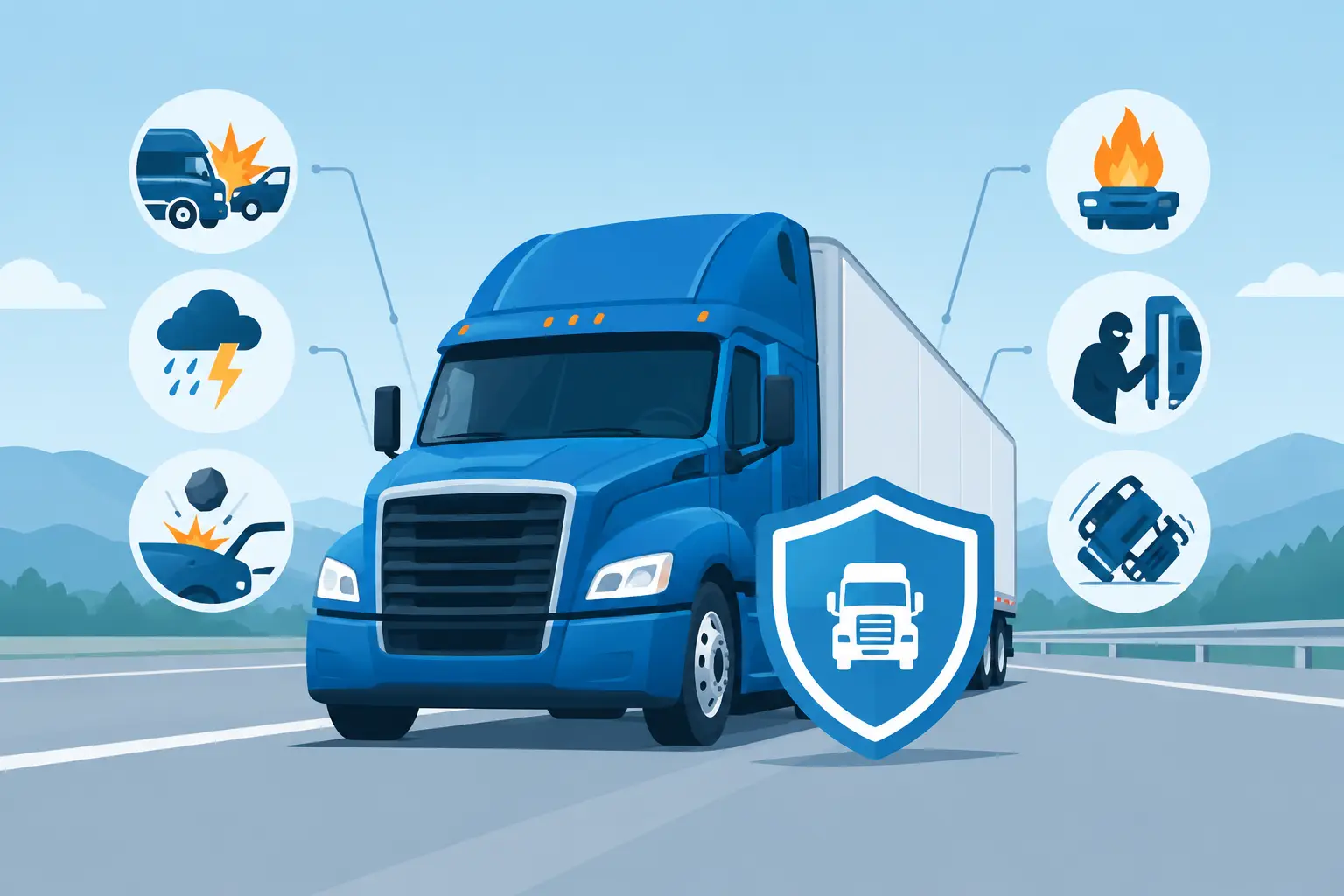

A broker calls after delivery and says the receiver rejected a damaged pallet. At nearly the same time, one of your trucks is involved in a right-turn accident. Those are two very different losses, which is why cargo insurance versus liability coverage is not an either-or decision for most carriers. One protects the freight you agreed to haul. The other protects you when your truck causes injury or property damage to someone else.
For a new authority, the terms can sound interchangeable because both policies are often requested before a load is released. They are not interchangeable. Knowing the difference can keep a cargo claim from becoming an out-of-pocket loss – and keep a required certificate from holding up your next dispatch.
Cargo Insurance Versus Liability Coverage: The Core Difference
Primary auto liability is built around harm caused by your truck. If your driver clips a passenger vehicle, damages a loading dock, or causes an accident that injures another motorist, liability coverage responds to covered third-party bodily injury and property damage claims. It protects the public from the damage your operation may cause.
Motor truck cargo insurance is built around the customer’s freight in your care, custody, or control. If a reefer fails and a food load spoils, a load is stolen from a secured lot, or freight is damaged in a rollover, cargo coverage may respond, subject to the policy terms, deductible, cause of loss, and exclusions.
The distinction matters most when a claim is expensive. A $100,000 liability limit does not provide $100,000 to pay for damaged freight. Likewise, a $100,000 cargo limit does not pay to repair the other driver’s vehicle after an accident. Each policy has its own purpose, limit, conditions, and claim process.
A right-turn accident is a liability claim
Picture a dry van making a tight right turn in Salt Lake City. The trailer swings wide and strikes a parked car. The car needs repairs, and its driver later alleges an injury. That is the type of event primary auto liability is designed to address.
Federal and state requirements, your authority type, your commodity, and your contracts can all affect the liability limit you need. Many for-hire interstate carriers carry at least $750,000 in primary liability, while brokers, shippers, and certain operations may require $1 million or more. The right limit is not just about meeting a minimum filing requirement. It also has to fit the work you accept.
A freight loss is a cargo claim
Now consider a flatbed carrier hauling machinery. Improper securement shifts during transit, damaging part of the shipment. Or a hot-shot operator leaves a loaded trailer overnight and the freight is stolen. Those are cargo exposures, not auto liability exposures.
Cargo policies commonly state a maximum limit per vehicle or per loss. If you haul a $250,000 load with a $100,000 cargo limit, the gap can become your business’s problem. A shipper or broker may also require a specific limit on the certificate before tendering the load, often $100,000, but sometimes substantially more for electronics, pharmaceuticals, auto parts, refrigerated goods, or specialized equipment.
What Liability Usually Does Not Pay
A common and costly misunderstanding is assuming primary liability covers everything that happens while the truck is moving. It does not generally pay for the value of the freight you were hired to transport. It also does not repair your own tractor or trailer after a collision. That is where physical damage coverage may apply.
Liability can also have limits that are quickly consumed in a serious injury accident. If your business runs long-haul routes, operates in dense traffic, uses newer equipment, or hauls under demanding customer contracts, a higher liability limit or an umbrella policy may be worth discussing. It depends on your operation, assets, lanes, and risk tolerance.
There is another point owner-operators should understand: an MCS-90 endorsement is not cargo coverage and should not be treated as extra insurance for every loss. It is a federal financial responsibility endorsement tied to certain public liability obligations. It does not replace the need to read your policy or carry the coverages required by your freight contracts.
What Cargo Coverage May Exclude
Cargo insurance is not a blank check for every problem involving a load. Policy language matters. Certain commodities may be excluded, limited, or require prior approval. Refrigerated freight can involve specific temperature-control conditions. High-value goods, household goods, hazardous materials, live animals, unattended vehicles, employee theft, and delay-related losses may be treated differently from ordinary general freight.
A cargo policy may also require reasonable steps to protect the shipment. That can include using proper securement, maintaining refrigeration equipment, following parking requirements, and reporting a loss promptly. If your dispatch operation changes from dry van freight to electronics, reefer loads, or auto hauling, do not assume the old cargo policy still fits the new risk.
The deductible matters too. A $1,000 or $2,500 deductible may be manageable on a large loss but painful if your operation sees repeated minor claims. The cheapest premium is not always the best buy if its deductible, exclusions, or commodity restrictions leave your most common loads exposed.
Why Brokers and Shippers Ask for Both
Brokers and shippers are protecting their freight, their customers, and their own contractual obligations. That is why their onboarding packet may ask for a certificate showing primary auto liability and motor truck cargo, along with the right limits and active dates.
A certificate is evidence of insurance, not the policy itself. Still, errors on a certificate can delay pickup, create tension with a broker, or cost you a load. If you add a truck, change your legal name, expand to a new commodity, or need a certificate holder listed quickly, your insurance agency should be able to respond without making dispatch wait all day.
For leased owner-operators, the answer can be more complicated. Your motor carrier may provide certain liability coverage while you are dispatched under its authority, but cargo responsibility can depend on the lease agreement and the carrier’s policy. Ask before assuming you are covered. Get the arrangement in writing and understand when coverage begins and ends.
Choosing Limits That Match Your Freight
Start with the largest realistic load value you will accept, not only the loads you hauled last month. A carrier moving ordinary dry goods may be comfortable at one cargo limit, while an auto hauler, reefer operator, or power-only carrier hauling customer trailers may need a very different approach.
Then review the contracts behind the freight. Some broker-carrier agreements require higher limits, specific cargo terms, or limits for theft and unattended equipment. Do not sign first and ask about insurance after the first load is booked. A contract can make you responsible for more than your policy pays.
Your liability decision deserves the same practical review. Consider where you run, how often you operate in metro areas, driver experience, equipment values around you, and the size of your business assets. A one-truck new authority and a 25-truck regional fleet do not have identical exposures, even if both pull dry vans.
At MC Truck Insurance, we look at the operation behind the quote: your routes, equipment, drivers, commodities, and customer requirements. That is how a trucking-focused agency helps you avoid buying a policy that looks fine on a certificate but fails to match the work you actually do.
If a Loss Happens, Protect the Claim Early
After an accident or cargo loss, act quickly but do not speculate about fault. Make sure people are safe, notify law enforcement when appropriate, photograph the scene, preserve bills of lading and load condition records, and report the claim to your insurer or agent promptly. For cargo losses, document seal numbers, temperatures when relevant, securement, pickup condition, delivery condition, and any salvage steps taken.
Do not dispose of damaged freight or authorize repairs without direction when a claim is involved, unless safety requires immediate action. The insurer may need to inspect the freight, vehicle, equipment, or accident scene. Good records protect your claim and can help defend your business if a customer disputes what happened.
The best time to sort out cargo and liability coverage is before a broker sends over a high-value load at 4 p.m. Review your limits when your freight, lanes, trucks, or contracts change, and make sure the policy protecting your business is built for the miles you actually run.