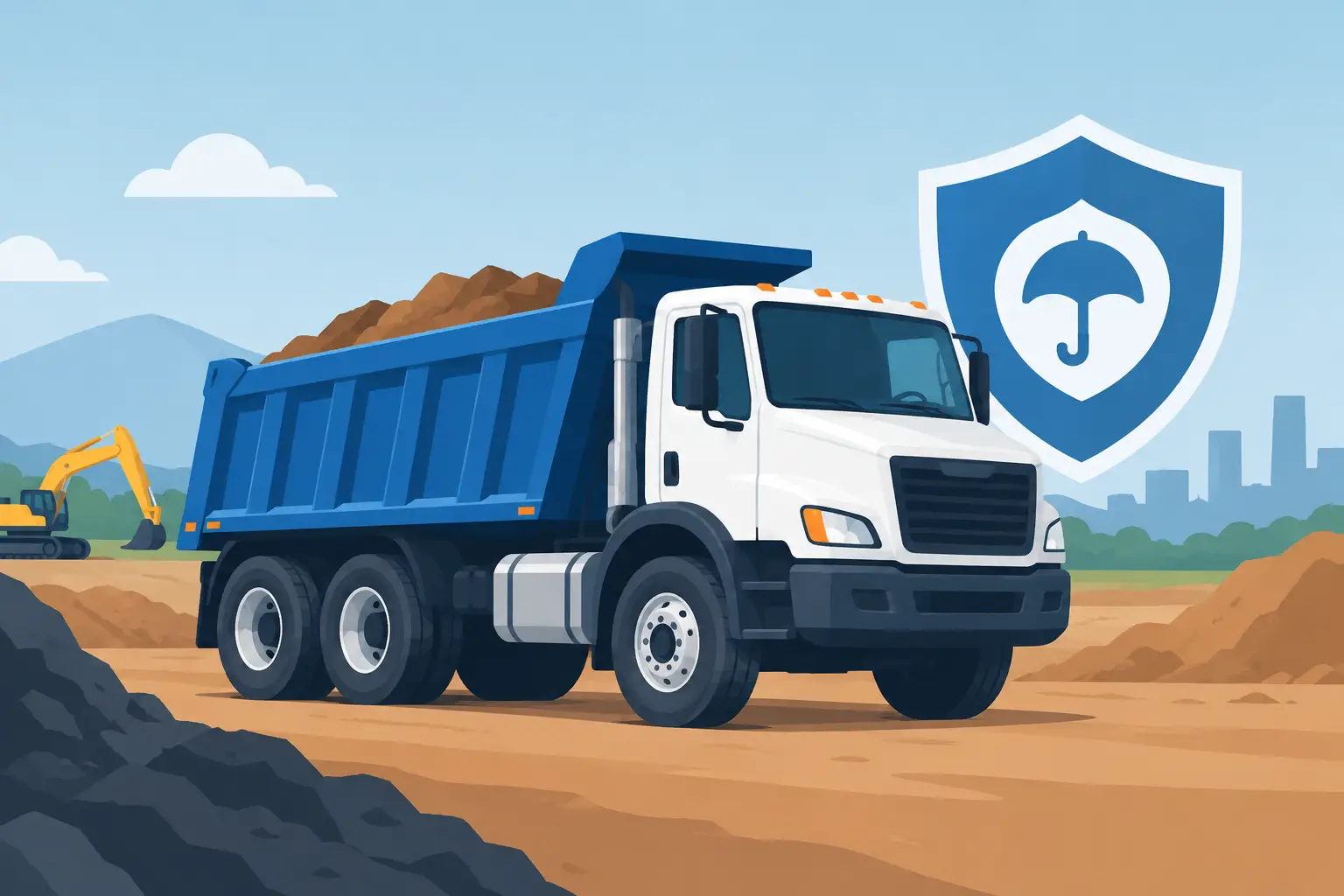
A dump truck can be parked for one day and still cost money. A claim, a missed certificate, or a policy that does not match the work can keep it parked much longer. That is why dump truck coverage cannot be treated like a generic commercial auto policy. Hauling gravel to a jobsite, moving demolition debris, running asphalt, or pulling a side dump creates a different risk profile than long-haul dry van freight.
The right policy starts with an honest picture of how you operate: where you run, what you haul, who drives, where trucks load and unload, and what your contracts require. Coverage is not just about meeting a minimum limit. It is about protecting the business you have built when a job goes sideways.
What Dump Truck Coverage Usually Includes
Most dump truck operations need several policies working together. The exact combination depends on whether you run local construction routes, cross state lines, haul for municipalities, work under a general contractor, or operate a fleet with multiple drivers and trailers.
Primary Auto Liability
Primary auto liability is the foundation. It responds when your truck causes bodily injury or property damage to someone else in an accident. For a dump truck operator, that might mean backing into equipment at a jobsite, striking a passenger vehicle during a right turn, or causing damage after loose material falls from a truck.
Federal or state requirements may establish a minimum liability limit, but the minimum is not always enough for the work you take on. A large contractor, quarry, municipality, or broker may require higher limits before assigning loads. Higher limits can increase premium, but losing a good account because your insurance does not meet its contract requirements has a cost too.
Physical Damage
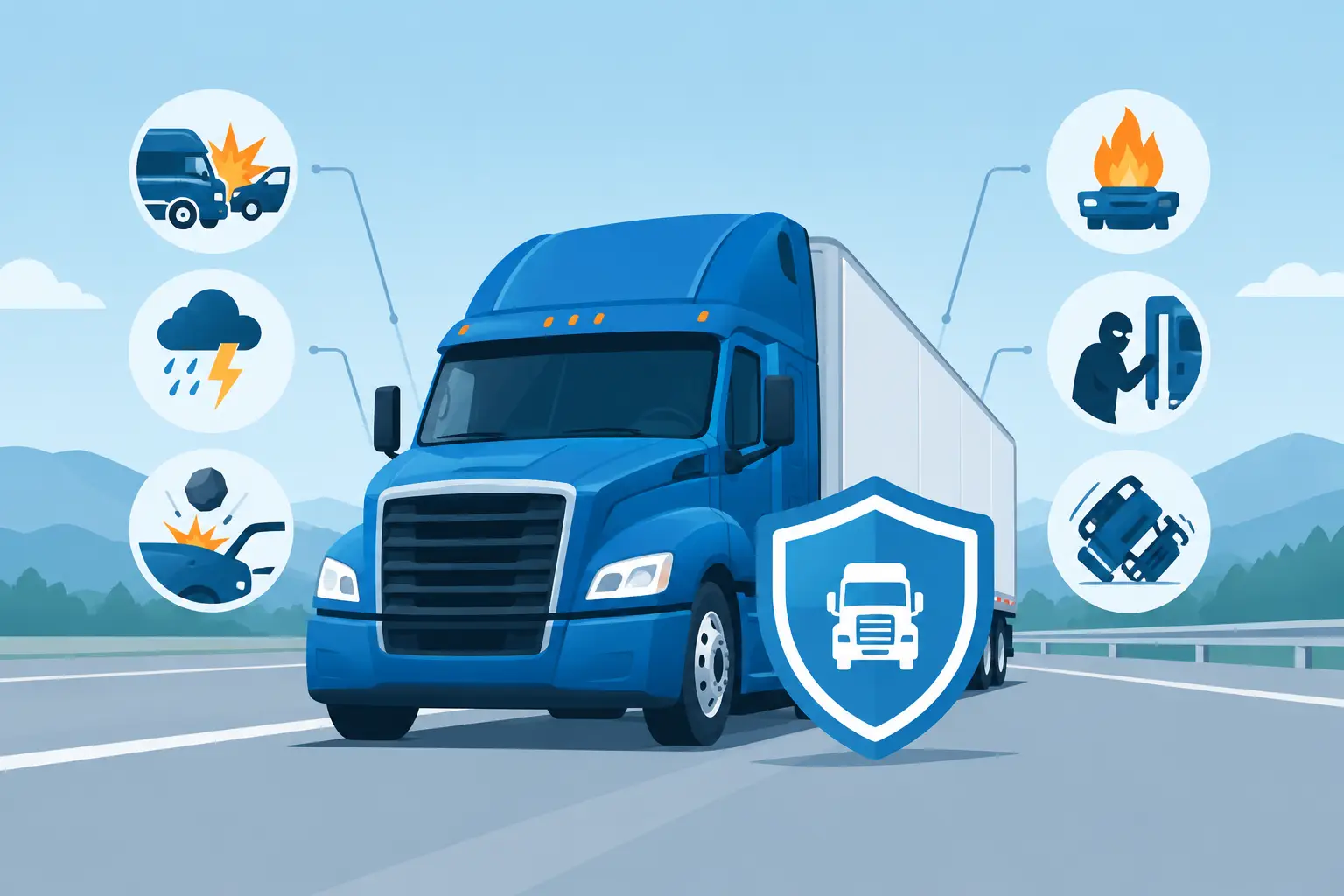
Physical damage protects your own equipment, subject to the policy deductible and terms. It commonly includes collision coverage for crash damage and comprehensive coverage for losses such as theft, fire, vandalism, or weather-related damage.
A financed truck often requires this protection, but it makes practical sense even when the truck is owned free and clear. A dump truck is a revenue-producing asset. If it is damaged, the repair bill is only part of the problem. You may also lose work while it is in the shop. Ask how the truck value is determined and choose a deductible your business could actually pay after a loss.
General Liability
Commercial auto liability does not handle every accident connected to your operation. General liability can address certain non-driving business exposures, such as an injury caused by your operations at a jobsite or damage connected to work outside the normal use of the truck.
The line between auto and general liability matters. For example, a loss during loading, unloading, or jobsite activity can involve complicated facts. Contractors often require general liability and may ask for additional insured status or specific certificate wording. Do not assume a standard certificate request is a formality. Send it over early so your insurance team can confirm what the contract actually calls for.
Motor Truck Cargo Coverage
Cargo coverage may be required when you haul material for others, but the need depends heavily on the commodity and your contract. Gravel, sand, aggregate, dirt, asphalt, recycled material, debris, and demolition loads do not all present the same exposure. Some materials have limited value, while others can create costly cleanup, disposal, or contamination issues.
Cargo policies also have exclusions, deductibles, and commodity restrictions. A policy written for aggregate may not automatically fit a new contract involving different materials. Before taking a new load type, especially waste, contaminated soil, or specialty material, verify that it is acceptable to the carrier.
The Details That Change Your Dump Truck Insurance Price
Two operators can own similar trucks and receive very different quotes. Insurance carriers look beyond the vehicle year and stated radius because dump truck work is tied closely to daily operations.
Your operating radius is a major factor. Local work can mean less highway exposure, but it may also mean more backing, more crowded jobsites, more tight turns, and more frequent stops. A truck moving between quarries and construction sites all day has a different loss pattern than one making a few longer runs on open roads.
The material you haul matters too. Clean aggregate is not viewed the same way as demolition debris, waste, hot asphalt, or materials that may require special handling. So do loading and unloading practices. Tipping incidents, uneven ground, overhead hazards, and soft jobsite surfaces can all affect the risk.
Driver experience is equally important. A clean motor vehicle record helps, but experience with heavy equipment, manual transmissions, jobsite maneuvering, and dump operations can matter in the underwriting conversation. Be accurate about all drivers, including occasional drivers. An undisclosed driver can create a serious problem after a claim.
Claims history, equipment value, garaging location, annual mileage, safety controls, and the number of units also shape pricing. There is no single “cheap dump truck policy” that fits every operation. The goal is to find coverage that meets real requirements without paying for limits or endorsements that do not serve your business.
Common Gaps That Can Hurt a Dump Truck Business
A policy can look complete until a contractor requests a certificate or a claim exposes an exclusion. One common issue is buying only the liability limit needed to get plates or meet a basic filing requirement, then finding out a major customer requires more.
Another problem is treating all work as the same. If you add a pup trailer, move from aggregate to debris hauling, begin crossing state lines, or start working directly for a general contractor, tell your agent before the change becomes a claim. Equipment, commodity, and radius changes can affect both coverage and eligibility.
Downtime is another gap worth discussing. Physical damage may repair or replace a truck after a covered loss, but it does not automatically replace the revenue lost while the truck is unavailable. Depending on the policy and carrier options, rental reimbursement, towing, roadside assistance, or other endorsements may be available. These are not always necessary, but they are worth weighing against how quickly you could put a substitute truck to work.
Finally, do not overlook umbrella liability. An umbrella can provide additional liability limits above qualifying underlying policies. It may make sense for operators with substantial assets, larger contracts, multiple trucks, or customers that require higher limits. It is not a replacement for correctly structured primary coverage, and underlying limits must meet the umbrella carrier’s requirements.
How to Build Coverage Around the Work You Actually Do
A useful insurance conversation begins with operational facts, not a guess at a premium. Be ready to explain whether you are an owner-operator or fleet, where units are garaged, your normal and maximum radius, the materials you haul, who hires you, and whether you operate under your own authority.
It also helps to have truck details, driver information, loss runs if available, and copies of any contract insurance requirements. If a contractor needs a certificate before you can start, timing matters. Waiting until the night before mobilization is how small paperwork issues turn into lost work.
At MC Truck Insurance, we look at the operation first, then shop competitive trucking insurance carriers around that real-world profile. We work for you – not the carriers – and we understand that a fast, accurate certificate can be just as important as the policy itself when a truck is ready to roll.
Review Your Policy Before the Next Job Changes
Dump truck coverage should be reviewed at renewal, but renewal is not the only time to speak up. Call when you buy or sell a truck, add a driver, pull a new trailer, enter a new state, change commodities, or sign a contract with higher insurance requirements. Updating the policy before the work begins is far easier than trying to explain an unreported change after a loss.
The best coverage is not the policy with the lowest number on the quote sheet. It is the one that lets you accept good work, satisfy customer requirements, and keep moving when the unexpected happens. Your truck earns when it is working. Make sure your insurance is built to help protect that work.