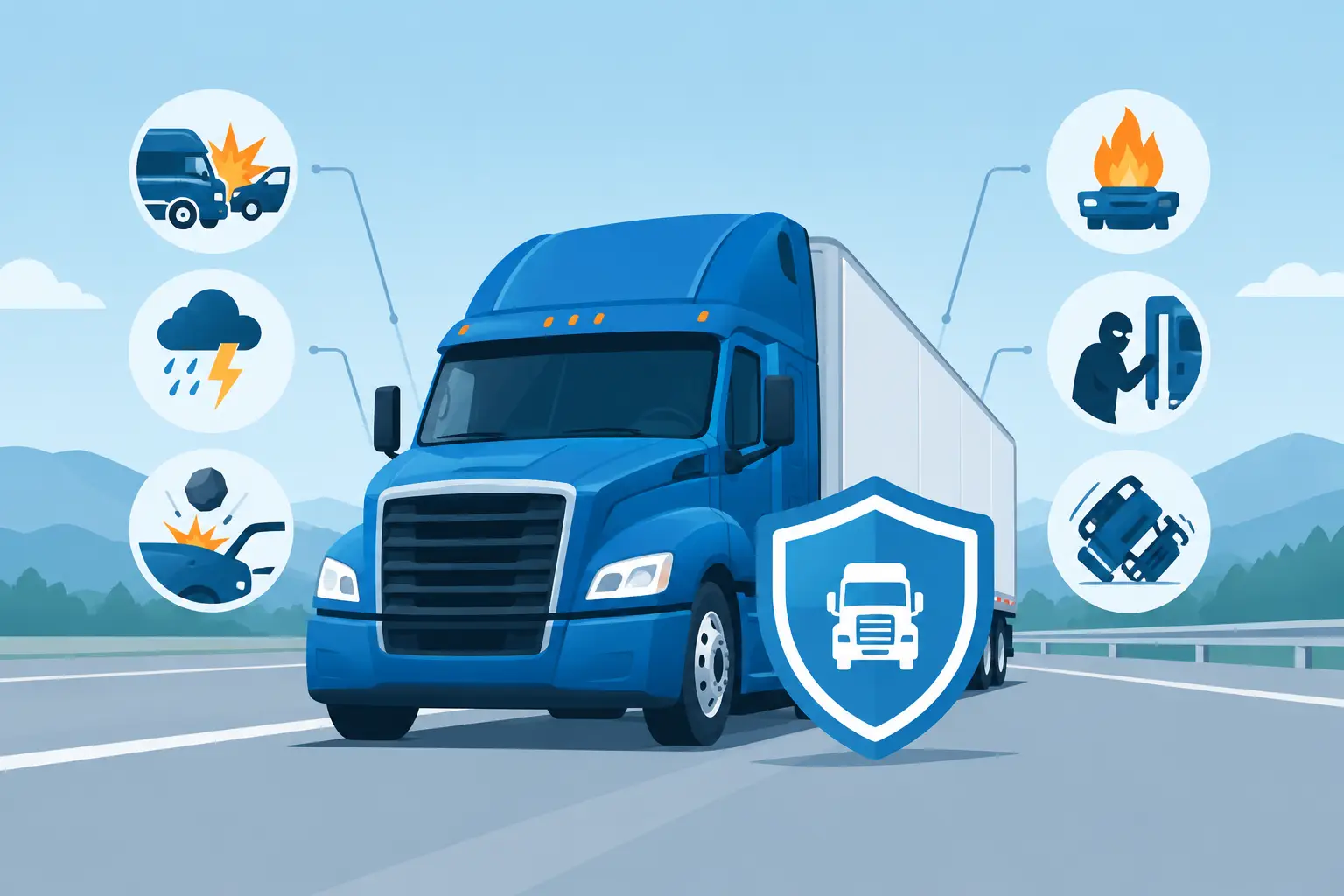
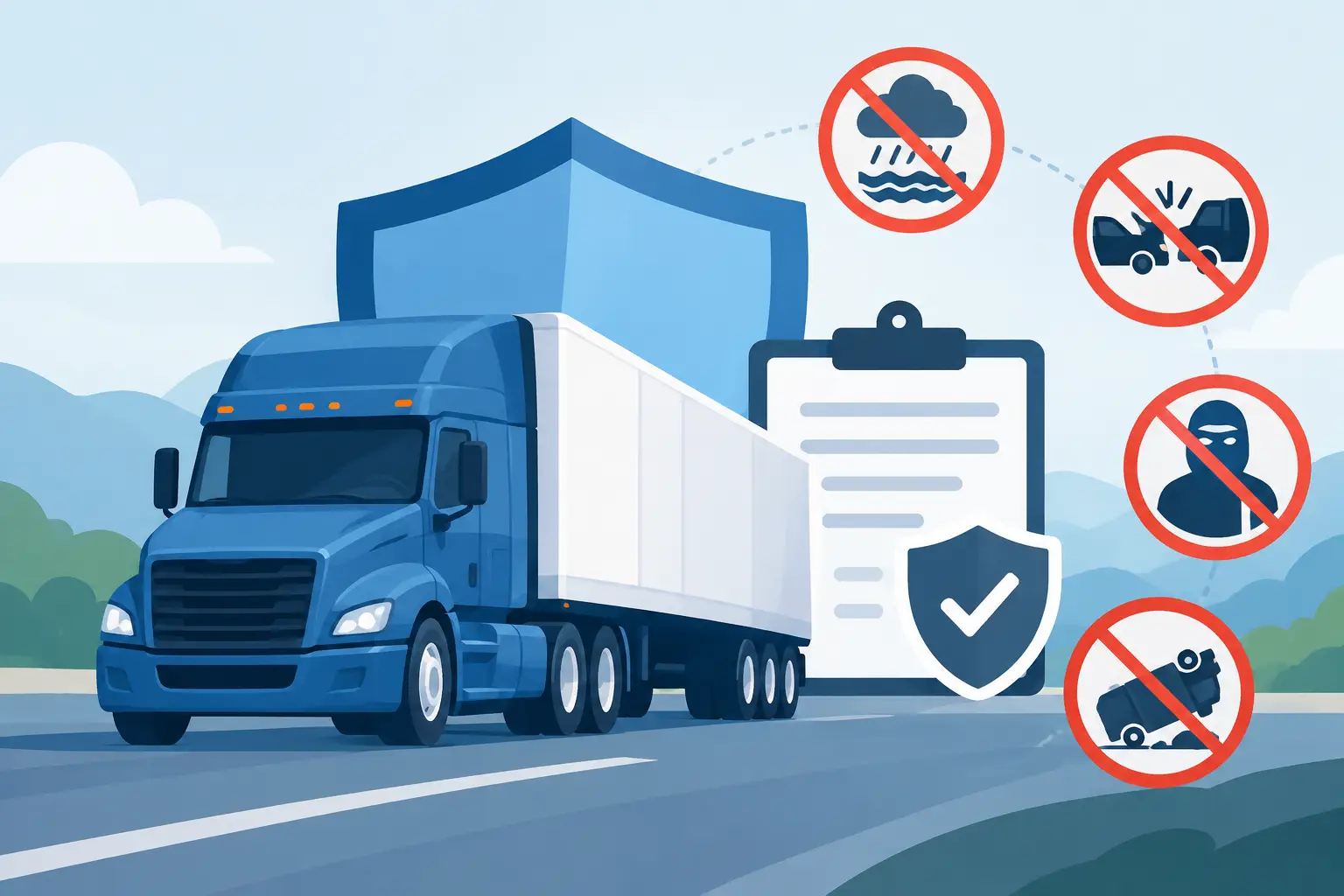
A load can be delivered on time, the truck can be parked safely, and a driver can still end up facing a claim the policy will not pay. That is the hard part about truck insurance exclusions: they are often buried in policy language until a loss puts them front and center. For a carrier running on tight margins, a denied claim can mean repair bills, cargo demands, downtime, and a customer relationship on the line.
An exclusion does not always mean you bought the wrong policy. Some exclusions are standard, some risks need their own endorsement, and some losses are simply outside the purpose of a particular coverage. What matters is knowing where the gaps are before dispatching the truck.
Truck Insurance Exclusions: Where Claims Get Denied
Commercial trucking insurance is built from separate coverages. Primary auto liability responds to third-party injury or property damage you cause. Motor truck cargo protects freight in your care, custody, or control, subject to its terms. Physical damage covers your own scheduled equipment after a covered loss. Each part has different exclusions, conditions, limits, and deductibles.
A common mistake is assuming that having a policy means every event involving the truck is covered. A primary liability policy may handle the other vehicle after a crash, but it does not automatically repair your tractor. Cargo coverage may apply to damaged freight, but it may not pay a broker’s lost revenue or a late-delivery penalty. The details matter because one accident can trigger several different expenses.
Your declarations page shows the broad outline. The exclusions, endorsements, and definitions tell the real story. If a policy says coverage applies only to scheduled autos, listed drivers, a stated radius, or a specific type of operation, those details are operational requirements, not paperwork to set aside.
Drivers, Equipment, and Operations Must Match the Policy
Many claim problems start with a change that was never reported. You hire a driver for a weekend run, buy another trailer, start operating under a new contract, or move from dry van into power-only work. The truck may be insured, but the actual exposure may not match what the carrier agreed to underwrite.
Unlisted or unacceptable drivers are a major concern. Every insurer handles driver scheduling differently. Some policies provide limited permissive-use coverage; others require drivers to be specifically listed or approved. A driver with a suspended CDL, a poor motor vehicle record, an undisclosed prior loss, or no proper authority to operate can create a serious coverage dispute.
The same goes for equipment. A newly purchased tractor, rental unit, trailer, or non-owned trailer may need to be added before it is used. Physical damage coverage in particular usually applies to equipment specifically scheduled on the policy. If the replacement truck is not listed, do not assume it has the same protection as the unit it replaced.
Operational changes can be just as important. Hauling general freight is not the same risk as hauling automobiles, refrigerated food, household goods, oversize loads, hazardous materials, or a dump trailer full of aggregate. Crossing into new states, expanding your radius, adding tow work, or taking Amazon-related loads may affect eligibility and coverage terms. The right answer depends on the policy, but the safest move is always the same: call before the first load, not after the claim.
Cargo Exclusions Can Be More Narrow Than Expected
Motor truck cargo insurance is one of the most misunderstood parts of a trucking program. It is designed for covered freight losses, but cargo policies commonly limit what freight is covered, how damage happened, and what costs are payable.
Certain commodities may be excluded or subject to a lower limit. Common examples include high-value electronics, jewelry, alcohol, tobacco, pharmaceuticals, live animals, autos, artwork, and temperature-sensitive freight. A carrier hauling a load of consumer goods may be fine one day and be outside its cargo authority the next because the commodity changed.
Refrigerated freight has its own traps. Coverage for spoilage may require a reefer breakdown endorsement and may exclude improper temperature settings, inadequate fuel, delayed maintenance, or driver error. If a reefer unit fails, the insurer will want to know the set point, temperature logs, fuel level, maintenance history, and when the driver discovered the problem.
Cargo policies may also exclude or limit losses caused by improper packing, loading, or securement. That does not mean a driver is automatically without protection whenever a load shifts. It means responsibility matters. If the shipper loaded and sealed the trailer, the facts may differ from a situation where your crew loaded a flatbed and failed to secure the freight correctly.
Another surprise is delay. A missed appointment, rejected load, or broker chargeback is not automatically cargo damage. Most cargo policies are not designed to pay ordinary business losses, loss of market, fines, penalties, or contractual promises that go beyond your legal liability. Read shipper and broker contracts carefully before agreeing to broad indemnity language.
Physical Damage Does Not Cover Every Repair Bill
Physical damage usually includes collision and comprehensive coverage for your tractor and, if scheduled, your trailer. Collision handles impact-related damage. Comprehensive addresses many non-collision losses, such as theft, fire, vandalism, hail, or an animal strike. But wear and tear is not an insured event.
Mechanical breakdown, defective parts, gradual deterioration, and routine maintenance are typically excluded. If an engine fails because of an internal mechanical issue, physical damage coverage generally will not pay to replace the engine. If that failure causes a covered collision, the resulting accident damage may be treated differently than the failed part itself.
Tire damage is another area where carriers can be caught off guard. A blown tire from normal road use may not be covered on its own. If that blowout leads to a rollover, the collision damage may be covered, subject to the deductible and policy terms.
Downtime creates a separate problem. Even when repairs are covered, lost income while the truck is in the shop is not always included. Downtime, rental reimbursement, and towing can require specific endorsements or have limited benefits. For an owner-operator, that can be the difference between a manageable claim and a month of missed revenue.
Intentional Acts, Illegal Activity, and Unsafe Use
Insurance is meant for accidental loss, not intentional damage or conduct that breaks the law. Policies commonly exclude intentional acts, fraud, racing, criminal activity, and losses involving a driver who is impaired or otherwise operating illegally. The exact impact of a violation depends on the claim facts and state law, but no carrier should plan operations around the hope that insurance will clean up an avoidable compliance failure.
This is especially relevant when pressure is high. A driver running beyond hours-of-service limits, using an improperly maintained unit, hauling a prohibited commodity, or continuing with known unsafe equipment can make a bad claim much harder to defend. Safety is not only about avoiding citations. It protects your people, your authority, your customer relationships, and your ability to renew coverage.
Contractual Liability Can Go Beyond Your Insurance
Brokers, shippers, and customers often send contracts that require a carrier to accept broad responsibility for losses. Some agreements require higher cargo limits, trailer interchange coverage, additional insured status, waiver of subrogation, or responsibility for freight-related expenses that a standard policy does not cover.
Do not assume a certificate of insurance changes the policy. A COI proves that certain coverage was in force at the time it was issued. It does not rewrite exclusions, increase limits, add a missing endorsement, or guarantee that a specific claim will be paid.
Before signing a new transportation agreement, compare its insurance requirements with your actual policy. If the contract requires $250,000 in cargo but your policy provides $100,000, the gap is not theoretical. If it makes you responsible for a customer trailer and you do not carry trailer interchange coverage, one damaged trailer can become your expense.
How to Find Gaps Before They Become Claims
You do not need to become an insurance lawyer to protect your operation. You do need a practical policy review whenever the business changes. Start with the commodities you haul, your operating radius, every driver, every power unit and trailer, and the contracts your customers require. Then ask direct questions about exclusions that apply to your operation.
Ask whether cargo coverage applies to your most valuable loads, whether reefer breakdown is included if you run temperature-controlled freight, and whether non-owned or customer trailers are protected. Ask what happens if a temporary driver takes a run, whether roadside assistance or towing work changes your program, and whether downtime coverage is available. Get clear answers in writing when possible.
At MC Truck Insurance, we look at the real operation behind the application – not just a truck count and a ZIP code. That matters when you are adding equipment, changing freight, hiring drivers, or trying to meet a broker’s insurance requirements without paying for coverage you do not need.
The best time to question an exclusion is while the truck is still in the yard. A quick review before the next change in your operation can protect the load, the equipment, and the business you worked hard to build.