A deer strike outside Cheyenne, a trailer tire blowout that takes out a fender, or a cab fire at a truck stop can put your revenue unit out of service fast. A physical damage coverage comparison is not just about finding the lowest premium. It is about knowing what your insurer will pay to repair or replace the truck you rely on to haul freight, and what you will have to pay out of pocket before that happens.
For owner-operators and fleets, physical damage is often one of the largest optional pieces of a commercial trucking policy. Lenders may require it, but even when they do not, going without it means accepting the full cost of a collision, rollover, theft, vandalism, fire, or weather loss. That is a big gamble when a tractor, trailer, or specialized body represents a major business investment.
What Physical Damage Coverage Actually Protects
Physical damage coverage protects your own equipment. It is different from primary auto liability, which pays for injuries or property damage you cause to someone else, and motor truck cargo coverage, which protects the freight you are hauling.
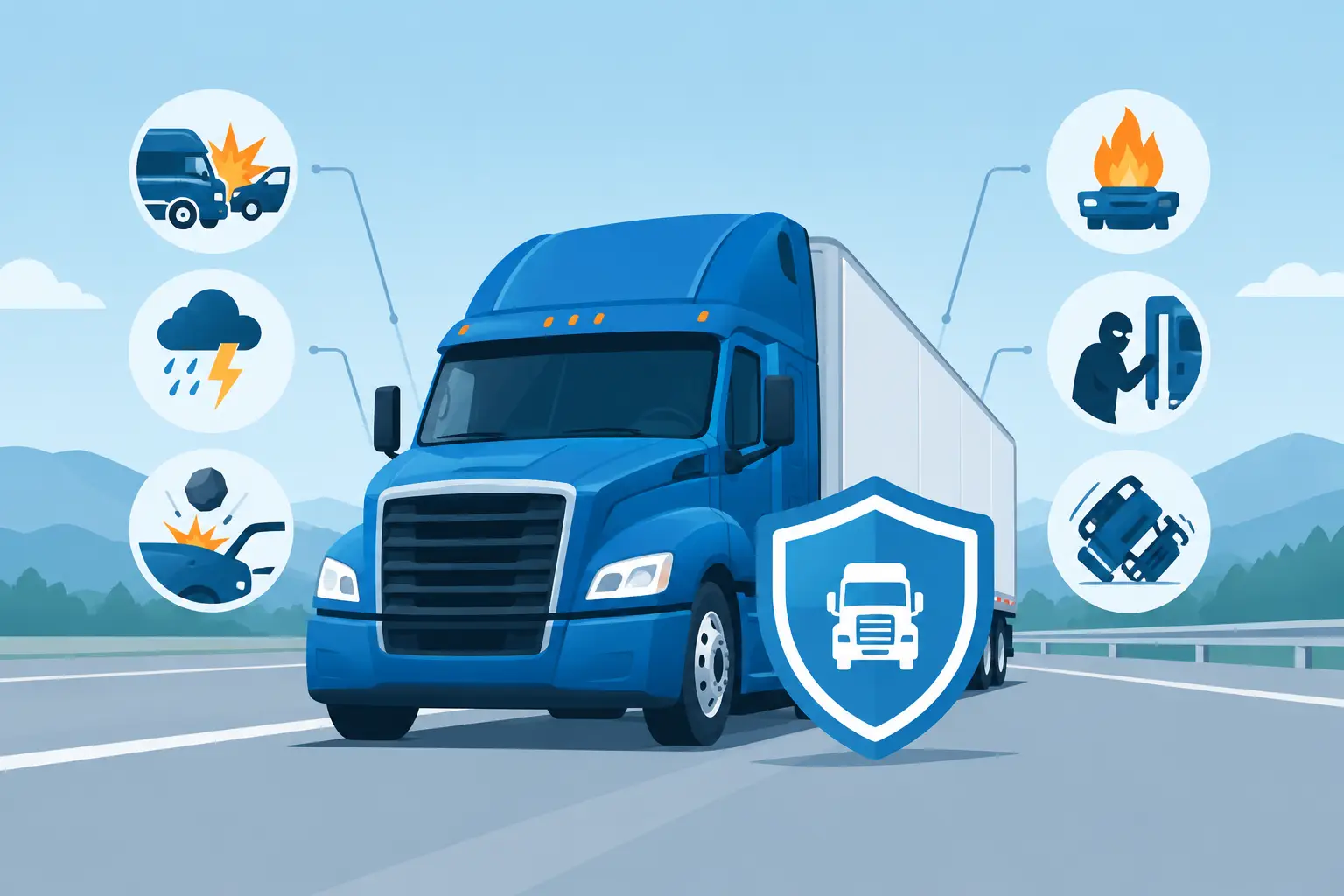
Most trucking physical damage policies include collision and comprehensive coverage. Collision applies when your equipment hits another vehicle or object, rolls over, or is damaged in an accident. Comprehensive, sometimes called other-than-collision, generally applies to losses such as theft, fire, hail, wind, vandalism, falling objects, and animal strikes.
A practical example: if your driver slides on ice and damages the tractor and trailer, collision coverage may respond. If the truck is parked overnight and is stolen or catches fire, comprehensive coverage may respond. In both cases, the claim is subject to the deductible and the insured value shown on the policy.
The details matter because physical damage can apply differently to tractors, trailers, non-owned trailers, permanently attached equipment, and specialized upfits. A dump body, tow equipment, refrigeration unit, liftgate, headache rack, or custom securement equipment may need to be specifically listed or valued. Never assume every accessory is automatically covered just because it is on the truck.
Physical Damage Coverage Comparison: Start With Value
The first question in a physical damage coverage comparison should be simple: what is the equipment actually worth, and how will the carrier determine payment after a total loss?
Many trucking policies use an actual cash value basis. That generally means the carrier considers the truck’s market value immediately before the loss, accounting for age, condition, mileage, and comparable equipment. It does not necessarily mean you receive what you paid for the truck, what you still owe the lender, or what it would cost to buy a replacement tomorrow.
Some policies may use stated amount or agreed value language. These terms can sound similar, but they do not always work the same way. A stated value is often used to set the policy limit and calculate premium, while the actual settlement may still be limited by the equipment’s actual cash value. An agreed value endorsement can offer more certainty in some situations, but you need to read the endorsement and confirm exactly how it settles a total loss.
This is especially important when used truck prices move quickly. If you financed a truck when values were high, its current market value could be less than your loan balance. That gap is not automatically covered by physical damage. Ask whether gap coverage is available or whether your lender has separate requirements.
For specialized operations, accurate valuation is even more important. A standard tractor valuation may not account for a wet kit, heavy-duty winch, car-hauler setup, dump body, or other expensive modification. Keep invoices, photos, and serial numbers for add-on equipment. They can make a major difference when a claim is being adjusted.
Compare Deductibles Against Real Cash Flow
The deductible is the amount you pay before the insurance carrier pays a covered physical damage claim. A higher deductible usually lowers the premium, but it shifts more loss cost back to your business.
A $1,000 deductible may feel manageable until you have two separate claims in one policy year. A $2,500 or $5,000 deductible may make sense for a larger fleet with cash reserves, a strong safety record, and a plan for handling repairs without delaying operations. For a new authority with one truck, a high deductible can turn a repairable accident into a cash-flow crisis.
Do not compare deductibles in isolation. Consider the cost and availability of parts, the repair shops your equipment requires, and whether you can cover the deductible while still making truck payments, payroll, fuel purchases, and insurance installments. A low premium is not a win if the deductible is too high to use when the truck is down.
Also ask whether comprehensive and collision have separate deductibles. A carrier may offer a lower deductible for glass or a different deductible for theft, storm damage, or animal strikes. Those differences may be useful depending on your routes and operating area.
Read Exclusions Before You Need a Claim
The biggest policy differences often appear in exclusions and limitations, not on the quote’s premium line. Every policy has conditions, and trucking operations have exposures that ordinary auto policies do not address well.
For example, physical damage coverage may not pay for mechanical breakdown, wear and tear, freezing, defective parts, gradual deterioration, or damage caused by an improperly maintained unit. If an engine fails because of a covered collision, resulting damage may be treated differently than an engine failure caused by a mechanical issue. The wording matters.
Trailer interchange is another area that deserves a close look. If you pull a trailer you do not own under a trailer interchange agreement, physical damage for that trailer may require trailer interchange coverage rather than relying on your own scheduled trailer coverage. Power-only carriers need to be particularly careful here. The trailer may be worth far more than the freight rate suggests.
Drivers should also understand how policy conditions affect a claim. Prompt reporting, police reports when appropriate, protecting the damaged equipment from further loss, and using approved repair procedures can all matter. A repair shop may want to begin work immediately, but the carrier may need an inspection first. Fast communication helps prevent unnecessary delays.
Consider Downtime, Towing, and Rental Needs
Physical damage pays for covered damage to equipment. It does not automatically replace lost revenue while that equipment is in the shop. That distinction catches many trucking businesses off guard.
If your only tractor is down for three weeks after a collision, you may lose booked loads, miss a customer commitment, and still have fixed bills due. Some carriers offer downtime, loss-of-use, rental reimbursement, towing, or roadside expense options. Availability and limits vary widely, and these endorsements are not a substitute for a real continuity plan. Still, they can soften the financial hit.
Look closely at the trigger for any downtime benefit. Is it available only after a covered physical damage claim? Does it begin after a waiting period? Is payment based on actual expenses, a daily limit, or a set number of days? A small endorsement limit can be helpful, but it will not cover a month of gross revenue.
For fleets, the best protection may be a combination of proper coverage and operational planning. That can include relationships with rental providers, backup units, reliable repair facilities, and a dispatch plan for moving freight if one truck goes down.
What Changes the Price of Physical Damage
The equipment’s value is a major rating factor, but it is not the only one. Carriers also look at the vehicle type, garaging location, radius of operation, driver history, prior losses, safety controls, and how the truck is used. A long-haul reefer unit, a car hauler, a heavy tow truck, and a local dump truck all have different repair costs and loss patterns.
A cheaper quote may reflect a higher deductible, a lower stated value, narrower endorsements, or a carrier appetite that does not fit your operation well. That does not make it automatically wrong. It means you need a side-by-side review that compares like with like.
When you receive quotes, verify the VIN, year, make, model, listed value, deductible, coverage form, and every scheduled piece of equipment. One incorrect digit or an omitted trailer can become a serious problem after a loss. Update your policy when you buy, sell, lease on, or modify equipment. Waiting until renewal is risky.
Questions Worth Asking Before You Bind
Before choosing a physical damage option, ask your agent how a total loss is settled, whether the insured value is sufficient, and whether specialized equipment is included. Confirm what deductible applies to collision, comprehensive losses, glass, and theft. If you haul power-only or interchange trailers, ask exactly how those trailers are protected.
It is also reasonable to ask about towing limits, rental reimbursement, downtime options, repair-shop requirements, salvage handling, and the claims process after hours. A good answer should be plain English, not a vague promise that you are “fully covered.”
At MC Truck Insurance, we shop trucking-focused options with the real operating picture in mind: the equipment you run, the freight you move, where you travel, and how much downtime your business can absorb. The right choice is not always the lowest number on the quote. It is the coverage you can understand, afford, and count on when your truck cannot roll.