
A six-car wedge may look like one load, but every vehicle on that trailer has its own value, condition report, pickup location, delivery deadline, and claim potential. That is why auto hauler insurance requirements are more involved than simply buying a standard trucking policy and getting an MC number. The right limits have to satisfy federal or state rules, your customers, and the real exposure of moving high-value vehicles.
For a new authority, getting the policy wrong can delay activation or cost you a load. For an established carrier, a weak cargo limit or missing endorsement can turn a routine broker onboarding request into downtime. Built by truckers for truckers, MC Truck Insurance looks at the equipment, lanes, driver history, and vehicles you transport before matching coverage to the operation.
What Auto Hauler Insurance Requirements Actually Include
There is no single insurance package that fits every auto transport company. A carrier hauling auction vehicles within one state faces a different risk than a long-haul operator moving luxury inventory dealer to dealer across the country. Still, most auto haulers need primary auto liability, motor truck cargo, and coverage for physical damage to their own tractor and trailer.
Primary auto liability pays for bodily injury and property damage you cause to others in an at-fault accident. It is the coverage tied most directly to your operating authority. If your truck takes a wide right turn and strikes a passenger vehicle, primary liability responds to the third party’s injury and property-damage claim, subject to the policy terms and limit.
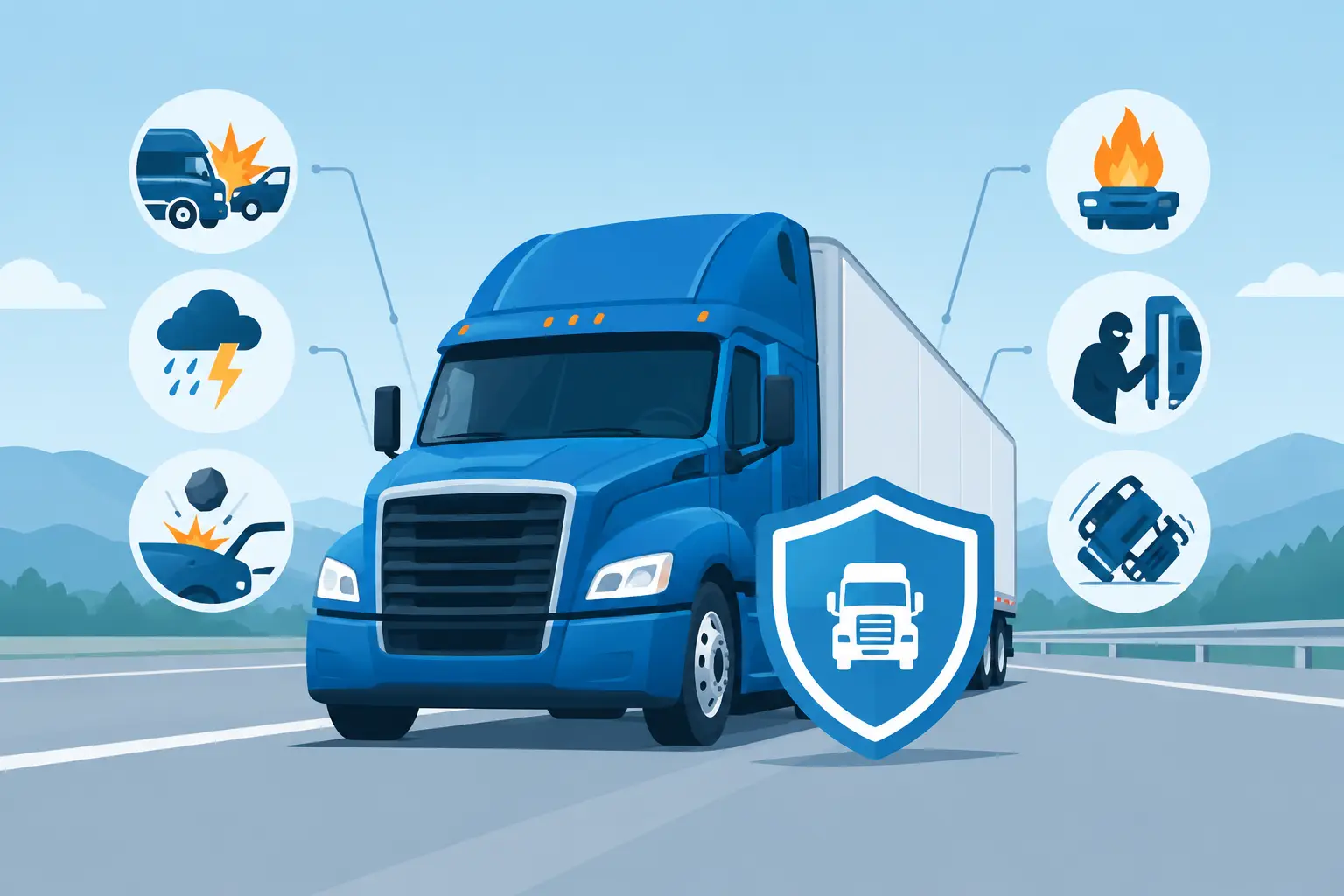
Motor truck cargo covers the customer vehicles in your care, custody, or control. This is where auto hauling differs sharply from general freight. A minor loading incident, a low branch, road debris, theft, vandalism, hail, or a rollover can create a substantial claim when several vehicles are on the trailer. The cargo policy needs to match your maximum load value, not the value of an average car.
Physical damage is generally optional from a regulatory standpoint, but it is often required by a lender if you finance the tractor or trailer. It covers damage to your own equipment from collision, comprehensive losses such as fire or theft, and other covered causes. A high-value quick-loader, wedge, or multi-car trailer is difficult to replace quickly, so skipping this coverage may save premium while increasing the risk of long operational downtime.
Federal Liability Minimums for Interstate Carriers
Most interstate auto haulers operating commercial motor vehicles over 10,001 pounds GVWR are subject to federal financial responsibility rules. For non-hazardous property, the common federal minimum is $750,000 in public liability coverage. Your insurer files the required proof of financial responsibility with the FMCSA for your authority.
That number is a legal floor, not necessarily the limit your business needs. Many auto transport brokers, dealerships, auctions, and shippers require $1 million in primary auto liability before they will tender freight. A $1 million limit is also common because a serious highway accident can exceed $750,000 fast, especially when multiple vehicles, injuries, or significant property damage are involved.
If you haul intrastate only, your state may have different liability rules. If you cross state lines, haul for-hire, or plan to expand later, your authority and insurance setup should be reviewed for the work you actually perform. Do not assume an intrastate setup meets interstate requirements just because the truck and trailer are the same.
Cargo Limits: The Number Brokers Look At
Federal rules do not establish one universal motor truck cargo minimum for ordinary for-hire property carriers. That does not mean cargo coverage is optional in the real marketplace. Brokers and shippers nearly always require it, and their contracts may specify the limit, deductible, and acceptable insurer rating.
For many auto haulers, $100,000 cargo is a starting point. It may be enough for a smaller trailer carrying lower-value auction or salvage vehicles. It can be far too low for a seven-, eight-, or nine-car load, a load of new dealer inventory, or even several late-model pickups and SUVs. Some customers require $250,000, $500,000, or more.
Run the math before choosing the limit. Count the maximum number of vehicles you can legally carry, then use a realistic high-end value for the mix of vehicles you accept. If your trailer can hold eight vehicles and you occasionally take newer units worth $40,000 each, a $100,000 cargo limit leaves a major gap. You may not haul that kind of load every day, but one accepted dispatch is all it takes.
Cargo wording matters as much as the limit. Ask whether the policy addresses loading and unloading, theft, unattended equipment, terminal storage, employee dishonesty, and damage caused by shifting vehicles. Policies can also have restrictions for certain vehicle types, oversize units, salvage titles, dealer plates, or vehicles transported under their own power. A low deductible sounds attractive until the premium jump makes no business sense, but a deductible that is too high can hurt cash flow after a small claim.
The Coverage Details That Commonly Hold Up a Load
A certificate of insurance, or COI, is often requested before dispatch. It shows active coverage and limits, but it does not rewrite your policy. A broker may also require additional insured status, a waiver of subrogation, specific cancellation language, or proof of cargo coverage. These requests need to be checked against the actual policy rather than issued blindly.
The MCS-90 is another document that causes confusion. It is a federally required endorsement for many interstate for-hire carriers and supports public liability obligations. It is not extra collision coverage for your truck, and it does not replace cargo insurance. It can require reimbursement to the insurer when a payment is made for a loss otherwise excluded by the policy, which is one more reason to be accurate about your operation on the application.
Your application should clearly reflect whether you use an open trailer, enclosed trailer, stinger-steer, or a standard flatbed with vehicle freight. It should also identify your operating radius, garaging location, driver experience, prior losses, and the types of vehicles hauled. A carrier that says it moves used cars regionally but later starts hauling exotics nationwide may have a coverage problem, even if the policy is still active.
Auto Hauler Insurance Requirements for New MC Authorities
New authorities face more than a filing requirement. Insurers price the uncertainty of a new business, and auto hauling has its own underwriting concerns because of cargo values, loading exposure, and claim severity. The best approach is to prepare the details before requesting quotes.
Have these items ready:
- Your USDOT and MC numbers, or the application details if authority is still pending
- VINs, stated values, and ownership information for the tractor and trailer
- Each driver’s license, driving history, years of commercial experience, and prior claims
- Your expected lanes, radius, vehicle types, trailer capacity, and maximum cargo value
- Any broker, auction, dealership, or shipper insurance requirements you already have
Be honest about the work you intend to take. Choosing a narrow radius or lower cargo limit just to reduce the first premium can create trouble when the first profitable load falls outside that description. The better goal is coverage that lets you operate without repeatedly asking whether the dispatch fits your policy.
New carriers should also plan for payment structure. A lower down payment may preserve cash when launching, while paid-in-full or larger-down-payment options can sometimes reduce total premium. The right choice depends on startup capital and monthly operating pressure. Cheap coverage is not cheap if it cannot issue a requested COI quickly or if a gap in payment interrupts your authority.
Review Your Policy When the Business Changes
Insurance should move with the operation. Add the trailer before you hook it up. Add the driver before the first dispatch. Report a new garaging address, longer lanes, or a switch from auction cars to higher-value dealer or specialty vehicles before a loss exposes the mismatch.
The same goes for renewals. Rates, carrier appetite, driver records, and loss history change from year to year. Shopping early gives you time to compare more than the premium: review deductibles, cargo restrictions, claims service, payment terms, and whether the carrier can support the COI requests your customers make.
The right auto hauler policy should not leave you guessing at pickup. Know your limits, know what your cargo wording covers, and make sure your insurance partner can respond when a broker asks for paperwork with a vehicle already waiting on the trailer.