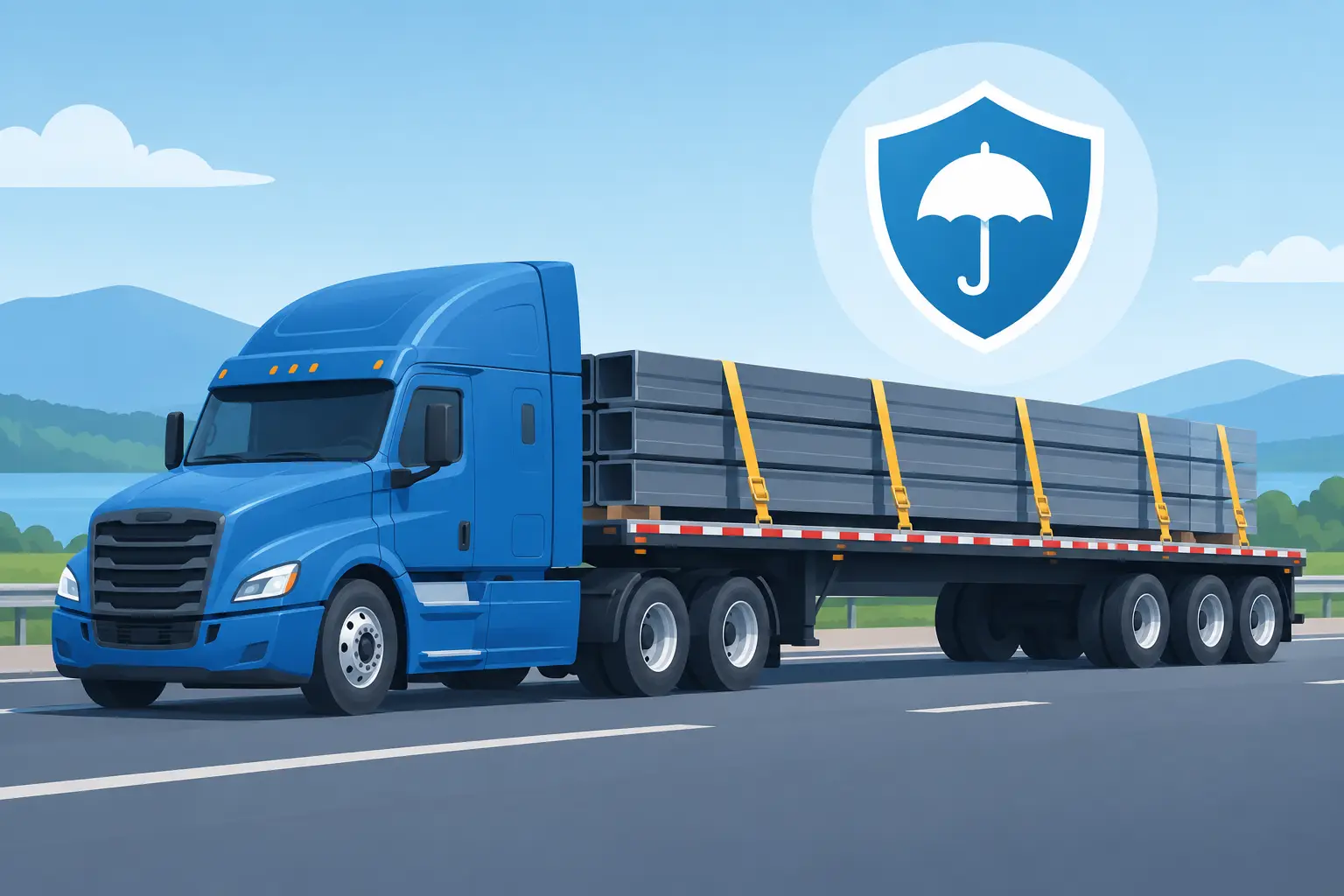
A flatbed can haul freight that will not fit in a box trailer, but that flexibility also creates a different insurance problem. If you are figuring out how to insure flatbed loads, do not start with a generic cargo limit and call it done. Start with what is on the deck, how it is secured, where it is traveling, and what your broker or shipper requires before you roll.
A $100,000 cargo policy may be enough for one load of bundled lumber and badly short for a single piece of machinery, steel coils, pipe, or fabricated components. One loss can put a small carrier in a cash-flow bind, especially when a broker holds payment while a claim is sorted out.
How to Insure Flatbed Loads the Right Way
Flatbed insurance starts with motor truck cargo coverage, but the policy has to match the actual operation. Cargo coverage generally responds when freight you are legally responsible for is damaged, destroyed, or stolen while you are transporting it. The wording matters. So do the exclusions, deductibles, commodity restrictions, and load limits.
First, identify the highest-value load you reasonably expect to haul, not just your most common load. A carrier hauling construction materials might usually move $35,000 loads, then accept a $180,000 machine load because the rate looks good. If the cargo limit is $100,000, the carrier may be responsible for the difference after a covered loss.
That does not always mean you need a permanent $250,000 or $500,000 limit. Higher limits cost more, and paying for excess protection year-round may not make sense for every operation. A better approach can be a base policy built around your normal freight, plus a way to arrange higher limits or a one-time cargo increase before you accept an exceptional load. The key is handling that conversation before pickup, not after an incident.
Your cargo policy also needs to reflect the commodities you haul. Flatbed carriers commonly move lumber, steel, coils, pipe, building products, equipment, machinery, and precast materials. Some items bring tighter underwriting rules or sublimits. High-theft freight, temperature-sensitive goods, hazardous materials, household goods, and certain electronics can require separate consideration. Do not describe your operation as “general freight” if the dispatch board tells a more specialized story.
Cargo Insurance Is Only Part of the Exposure
Flatbed claims are often tied to securement, loading, and weather. Cargo insurance may help with a covered freight loss, but it does not replace proper inspection, load distribution, dunnage, edge protection, chains, binders, straps, tarps, or federal securement compliance.
Consider a load of steel that shifts after a hard stop. The cargo damage could create a cargo claim. If the shifting freight damages another vehicle or injures someone, primary auto liability may be involved too. If your tractor, trailer, tarps, chains, or binders are damaged, physical damage or equipment coverage may be the policy that matters. These are separate coverages with separate limits and deductibles.
That is why a flatbed operation should be insured as a flatbed operation, not squeezed into a dry-van profile. Underwriters look at your equipment, radius of operation, driver history, prior losses, commodities, and securement practices. Accurate details give you a better chance of getting a policy that responds as expected and prevents unpleasant surprises at audit or claim time.
Know what happens to tarps and securement gear
Tarps, chains, binders, straps, coil racks, and other tools can be expensive to replace, particularly after a rollover, theft, or weather event. Coverage for those items is not automatic under every policy. Ask whether they are covered under physical damage, inland marine, or a scheduled equipment endorsement, and whether the stated value is enough.
The same goes for a detachable trailer, a stretch trailer, or specialized loading equipment. A low declared value may reduce premium, but it can leave you paying out of pocket when replacement costs are higher than expected.
Match Cargo Limits to Contracts and Load Value
Brokers, shippers, and freight platforms may require a certain cargo limit before they tender a load. $100,000 is common, but it is not a universal answer. Some customers require $250,000, $500,000, or more. Others require specific wording, a low deductible, or proof that certain commodities are not excluded.
Read the rate confirmation and shipper agreement before you book. The contract may make you responsible for cargo beyond what your insurance policy covers. It may also require prompt notice after damage, prohibit transferring the load without approval, or impose specific security procedures. A contract does not expand your insurance coverage simply because you signed it.
For every higher-value load, confirm four things before dispatch: the actual invoice or declared value, your available cargo limit, the deductible, and whether the commodity is covered without a special endorsement. If any one of those answers is unclear, get it clarified in writing.
Certificates Matter, but They Do Not Change Coverage
A certificate of insurance, or COI, shows a broker or shipper that your policy is active and lists the requested limits. It can keep a load from sitting on the board or prevent a pickup delay. But a COI is not the insurance policy itself, and it cannot override excluded freight, lower sublimits, or policy conditions.
Be careful when a customer asks to be listed as an additional insured or loss payee. Those requests have different meanings and may require policy changes. A certificate holder is simply the party receiving proof of insurance. Do not assume that checking a box creates the rights your customer is requesting.
Fast COI service matters in trucking because loads move fast. Still, speed should not replace accuracy. The name, address, required wording, limits, and effective dates should match the contract. A clean COI gets you loaded. The right policy protects you when the load does not go as planned.
Build a Claim File Before You Need One
Good claims handling starts at pickup. Flatbed freight gives you more opportunity to document the condition of a load because damage, packaging, and securement are often visible. Use that opportunity.
Take time-stamped photos of the freight before loading, during securement, and after final securement. Photograph existing damage, torn wrapping, broken bundles, inadequate blocking, exposed edges, and any concern you raise with the shipper. Keep the bill of lading, rate confirmation, inspection notes, scale tickets, delivery receipt, and communication with the broker or customer.
If cargo is damaged or shifts, protect people first and then prevent additional loss when it is safe to do so. Notify the broker, shipper, and insurance contact promptly. Do not discard damaged cargo, rework the load, admit fault, or authorize a disposal without direction when possible. A delayed report or missing paperwork can make an already difficult claim harder to resolve.
Review Your Flatbed Policy When Your Operation Changes
Insurance should change when the business changes. Adding a driver with limited experience, moving from regional lumber loads to interstate machinery hauling, buying a second trailer, or taking on a dedicated customer can all change the risk. Waiting until renewal can leave months of avoidable exposure.
This is especially true for new authorities. The first freight opportunities may not match the operation you originally described when obtaining your policy. Be upfront with your insurance advisor about the loads you are pursuing, even if you have not hauled them yet. It is much easier to adjust coverage before accepting a load than explain a mismatch after a claim.
At MC Truck Insurance, we look at the real work behind the policy – equipment, routes, drivers, commodities, contracts, and the loads you want to grow into. We work for you, not the carrier, and that means asking the practical questions before a coverage gap costs your business.
The right flatbed cargo setup is not the cheapest limit printed on a certificate. It is coverage that fits the freight on your deck, the contracts you sign, and the losses your operation cannot afford to absorb. Before your next unfamiliar or high-value load, make one call, verify the details, and get the answer in writing.