Your truck may be inspected, your ELD may be installed, and a dispatcher may already have freight waiting. But if the right filing has not reached the FMCSA, your new authority is not ready to run. That is why new MC authority insurance requirements deserve attention before you accept the first load, not after a broker asks for a certificate.
For a new for-hire carrier, insurance is more than protection after an accident. It is part of the federal authority activation process. The details matter: your legal business name, USDOT number, MC number, equipment, drivers, commodities, operating radius, and the insurance filing all need to line up.
What Federal Insurance Requirements Actually Apply
An MC number and a USDOT number are not the same thing. A USDOT number identifies a carrier for safety oversight. An MC authority generally allows a for-hire carrier to transport regulated property across state lines. If you are applying for interstate for-hire authority, the FMCSA needs specific filings before the authority can become active.
For most interstate, for-hire property carriers hauling non-hazardous freight, the federal financial responsibility minimum is $750,000 in primary auto liability. That is the regulatory floor, not necessarily the amount a broker, shipper, or load board will accept. Many freight customers require $1 million in auto liability, particularly for dry van, reefer, flatbed, and power-only operations.
Hazardous-material hauling can require higher limits, commonly $1 million or $5 million depending on the commodity and how it is transported. Passenger carriers, household-goods movers, and carriers that operate only intrastate can face different requirements. State rules and customer contracts can add another layer, so a one-size-fits-all quote is rarely the right answer.
Primary Auto Liability and the FMCSA Filing
Primary auto liability responds when your truck causes bodily injury or property damage to others. Think of a driver making a tight right turn and striking a passenger vehicle, or a rear-end collision in construction traffic. This is the coverage that supports your federal financial responsibility requirement.
Your insurance company, not you, submits the required electronic filing to the FMCSA. It is commonly referred to as a BMC-91 or BMC-91X filing. Buying a policy is not enough if the filing does not show correctly under the authority’s exact business information.
That is why it pays to verify your legal entity name, MC number, USDOT number, and garaging address before binding coverage. A typo or mismatch can delay activation when you are trying to get on the road.
BOC-3 Is Required, but It Is Not Insurance
New authority owners often hear BOC-3 and insurance in the same conversation and assume they are the same product. They are not. A BOC-3 is a designation of process agents in the states where you operate. It is another filing needed for interstate operating authority, but it does not provide accident, cargo, or truck coverage.
Motor truck cargo coverage is also different from the federal auto liability filing. For most general freight carriers, cargo insurance is not what activates an MC authority with the FMCSA. Still, brokers and shippers commonly require it before they will tender freight. A $100,000 cargo limit is common in many general-freight contracts, but reefer freight, high-value electronics, auto hauling, and specialized loads may need more.
Coverage That Is Not Always Federal but Still Matters
The minimum legal requirement is only the starting point. The coverage you need to operate without constant friction depends on the freight, equipment, contracts, and how your business is financed.
General liability may be requested by warehouses, terminals, customers, or Amazon-related freight programs. It can address non-driving business exposures, such as an injury at your office or damage connected to your operations that is not covered by the truck’s primary auto policy.
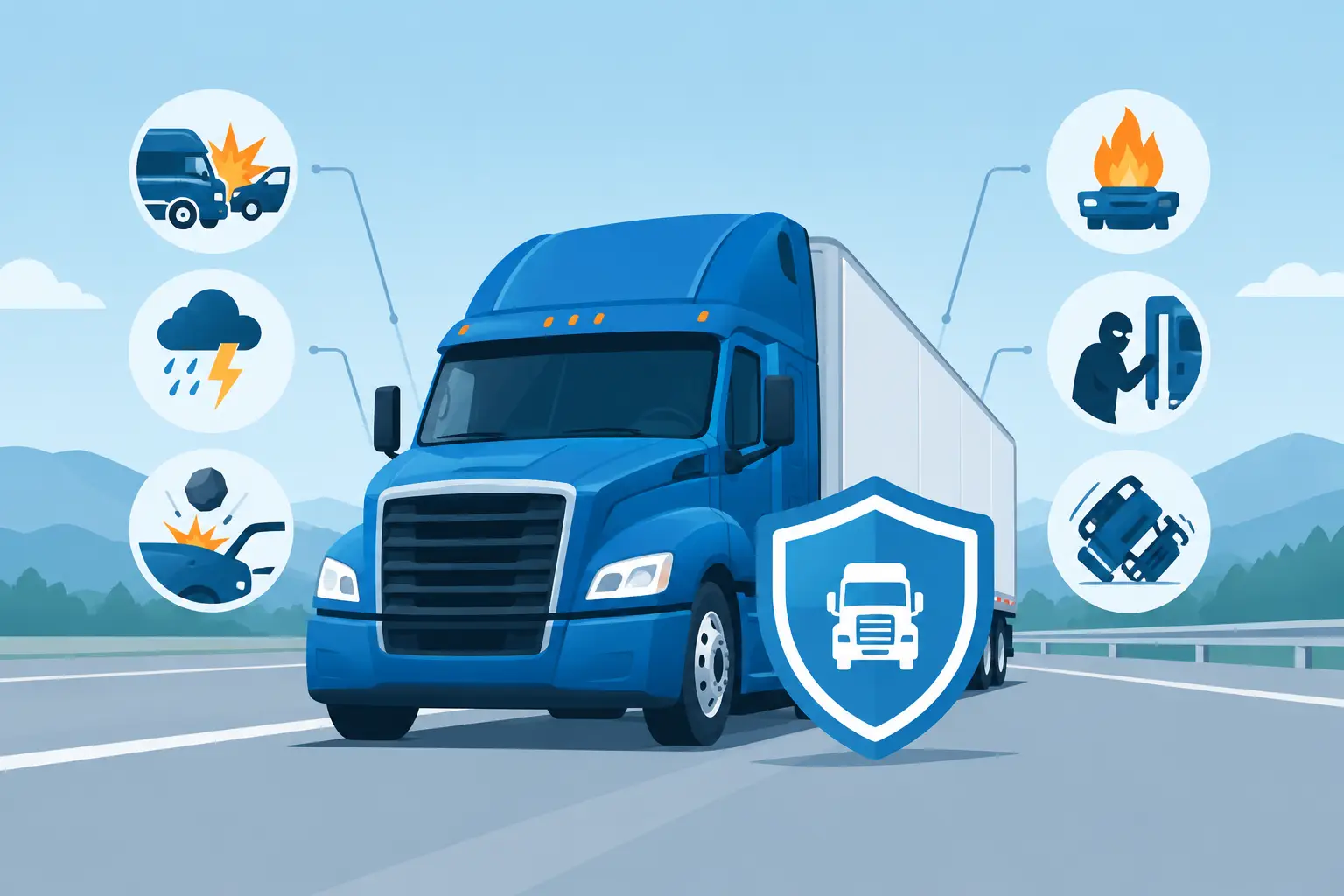
Physical damage coverage protects your tractor, trailer, or other scheduled equipment for covered collision, theft, fire, vandalism, and certain weather losses. It is usually required when equipment is financed or leased, but even a paid-off truck can create a major downtime problem if a total loss leaves you without funds to replace it.
Trailer interchange coverage applies when you pull a trailer you do not own under a trailer interchange agreement. It is not the same as cargo insurance. If you are power-only, run drop-and-hook freight, or pull brokered trailers, ask exactly who is responsible for physical damage to the trailer.
Non-trucking liability can be useful for some leased owner-operators during personal use, but it does not replace primary auto liability for an MC authority operating under its own authority. That distinction prevents an expensive misunderstanding.
Why New Authorities Usually Pay More
A new authority has no operating history under that MC number. Underwriters cannot see your loss trends, prior inspection results, safety performance, or years of continuous insurance for the new business. Even if you have driven safely for years, the carrier still has to price the uncertainty of a new operation.
Your prior commercial driving experience can help, especially when it is documented clearly. So can clean MVRs, stable prior insurance history, realistic operating plans, and a strong safety process. But a new MC authority should still budget for a higher first-year premium than a comparable carrier with several years of clean history.
Underwriters will look closely at the details that affect loss potential:
- The states you run, your radius of operation, and whether you operate long haul or regional
- Your equipment type, age, value, and whether you pull your own trailers or interchange trailers
- Each driver’s CDL experience, MVR, prior claims, violations, and employment history
- The commodities you haul, including temperature-sensitive, high-value, hazardous, or oversize freight
- Where trucks are parked, how often drivers are home, and whether your safety program is documented
Be straight about the operation you plan to run. Quoting local dry van and then hauling coast-to-coast refrigerated freight can create underwriting problems at the worst possible time – after a claim or during a certificate review.
New MC Authority Insurance Requirements That Prevent Delays
Start insurance shopping as soon as your authority application is underway. Do not wait until a dispatch service has a load ready. Some insurers can quote quickly, while others need time to review driver records, loss runs, equipment details, or specialized commodities.
Have your documents and operating plan ready. You will typically need your business details, USDOT and MC numbers if assigned, driver license information, vehicle VINs, current or prior insurance declarations, and a clear description of what you haul and where you run. If you have previous commercial insurance, accurate loss history is better than guessing.
Before coverage is bound, confirm the effective date and verify that the insurer will submit the proper FMCSA filing. Then confirm the filing shows as accepted before assuming your authority is active. Your policy documents, BOC-3 filing, and FMCSA authority status each serve a different purpose.
Also plan for the first payment. New-authority policies can require a sizeable down payment, and installment plans may cost more overall. A cheap monthly number is not always the cheapest policy once finance charges, restrictive terms, excluded coverage, and cancellation costs are considered.
A certificate of insurance is another separate item. A broker may need one within minutes, sometimes with specific wording or additional-insured requests. A COI helps prove coverage to a customer. It does not replace the FMCSA filing, and it should match the policy you actually purchased.
Keep the Policy Aligned With the Operation
Your insurance needs do not freeze once authority is active. Adding a driver, buying a second truck, changing your freight, moving your garaging location, or expanding into new states can affect coverage and price. Report changes before the truck rolls, not after an inspection, accident, or rejected certificate exposes the gap.
The same rule applies at renewal. A carrier that has built clean inspection results, safe driving history, and stable operations should have the market reviewed rather than accepting a renewal without questions. MC Truck Insurance shops trucking-focused carrier options and helps keep filings, certificates, equipment, and driver updates moving when your business cannot afford to sit still.
Getting authority active is a milestone, but staying active is the real job. Set up coverage that matches the freight you intend to haul, keep every filing current, and treat fast insurance service as part of keeping the wheels turning.