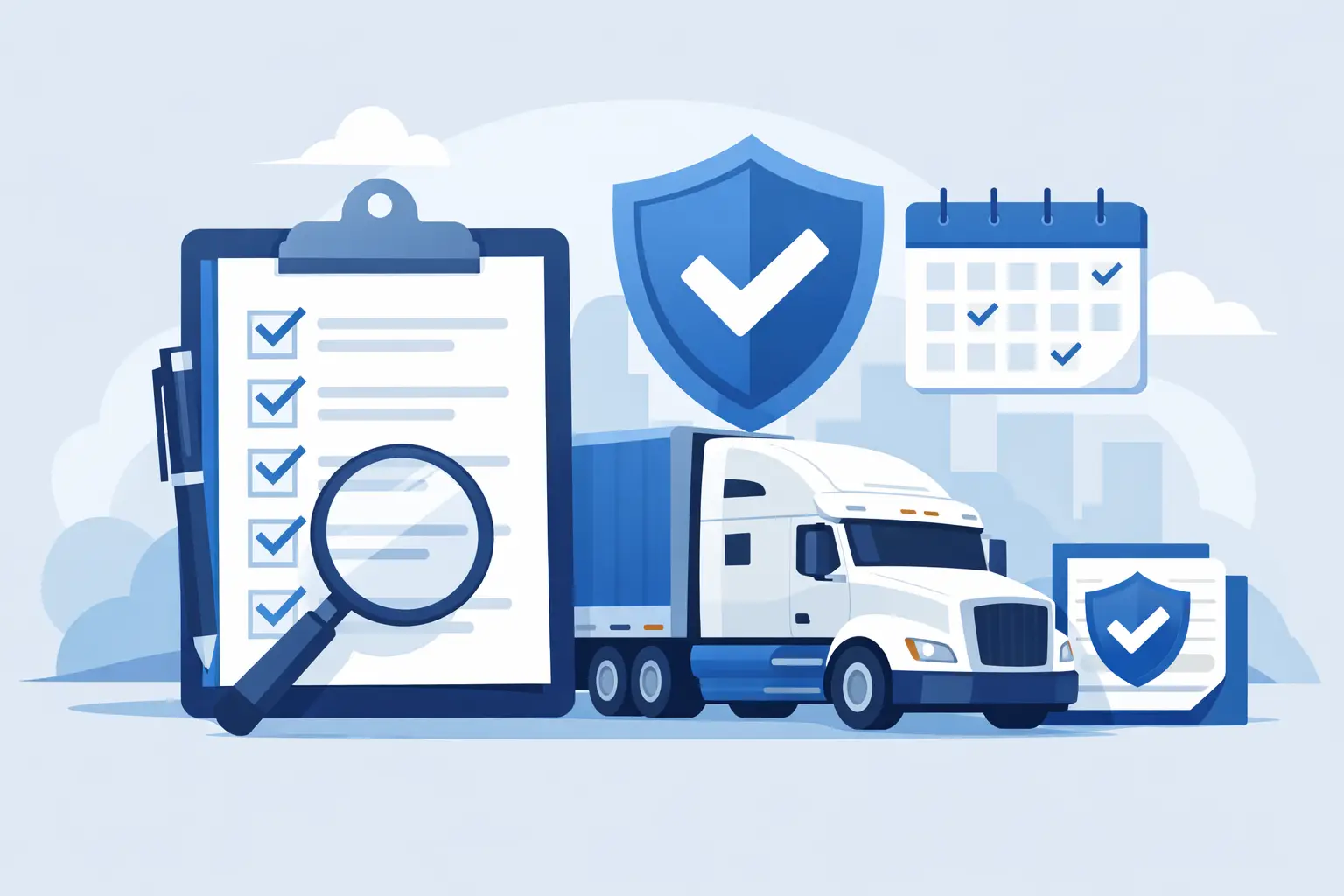
A renewal notice can look like routine paperwork until the premium jumps, a driver is missing from the schedule, or a broker asks for a certificate that no longer matches the load. This trucking insurance renewal checklist helps you get ahead of those problems before your current policy expires. The goal is not simply to renew. It is to make sure your coverage, limits, filings, and price still fit the operation you are running now.
For a one-truck owner-operator, that may mean correcting a garaging address or reviewing a new trailer. For a fleet, it can mean auditing a driver roster, loss history, and changes in freight lanes. Either way, renewal is your annual opportunity to make the insurance company rate the business you actually have, not the business you had 12 months ago.
Start Your Trucking Insurance Renewal Checklist Early
Start the process 60 to 90 days before the expiration date whenever possible. This is especially true if you have new drivers, recent losses, filings that must remain active, specialized cargo, or a renewal that is likely to increase. Waiting until the final week can leave your agent with fewer carrier options and less time to correct errors.
Early shopping does not mean changing carriers every year. Staying with a carrier can make sense when service has been solid, the claims experience is fair, and the renewal is competitive. But loyalty should not mean accepting a rate without reviewing the market and the details behind it. A trucking business changes fast. Rates can change with freight type, operating radius, driver experience, violations, claims trends, and carrier appetite.
Put one person in charge of gathering renewal documents, even if several people provide the information. That could be the owner, safety manager, office manager, or fleet administrator. One clear point of contact reduces conflicting vehicle lists and last-minute questions.
Review What Changed in Your Operation
Insurance underwriters are pricing your current exposure. If the application says local dry van work but your trucks now run refrigerated freight across 48 states, the policy information needs to reflect that. An inaccurate application can create trouble when you need coverage most.
Review the basics first: your legal business name, DOT and MC numbers, mailing address, physical garaging locations, contact information, and years in business. If you changed entities, bought another company, added a DBA, or moved the yard, flag it early. Those details can affect underwriting and certificates of insurance.
Then review how and where you operate. Be ready to explain your usual operating radius, the states you run, whether you cross into Canada or Mexico, and whether your work has shifted from contract freight to spot market loads. Share any new contracts with shippers, brokers, or Amazon-related operations if they carry specific insurance requirements.
Your freight matters just as much as your miles. A carrier hauling general dry goods may need a different cargo setup than one hauling pharmaceuticals, produce, machinery, automobiles, steel, or temperature-sensitive freight. Do not assume a broad description such as “general freight” answers every underwriting question. If your load profile changed, say so.
Audit Drivers Before They Become a Renewal Problem
Drivers are often one of the biggest factors in a trucking renewal. Review every person who may operate a covered unit, including the owner, relatives, part-time drivers, leased-on operators where applicable, and recently hired employees.
For each driver, confirm the spelling of the name, date of birth, license number, state, hire date, years of CDL experience, and type of equipment operated. Pull current motor vehicle records before submitting the renewal information. A ticket, suspension, accident, or license issue that appears late can change a quote or cause a carrier to decline the account.
Pay close attention to drivers added during the year. If someone has been driving but was never properly reported, do not wait for the renewal to address it. Ask how that driver should be handled under the policy. The answer depends on the policy terms and the relationship to your company, but silence is never the safe option.
If you have improved hiring or safety practices, document that progress. A written driver qualification process, MVR review schedule, dash cameras, coaching after violations, and clear cellphone rules do not erase a bad loss run. They can, however, give an underwriter a better picture of how you manage risk going forward.
Match Equipment to the Insurance Schedule
Walk the yard or review your equipment records against the policy schedule. Every power unit, trailer, and specialized piece of equipment should be accounted for. Compare VINs, stated values, vehicle types, garaging locations, and ownership status.
This review catches common costly mistakes: a sold truck still insured, a recently purchased truck not yet scheduled, a trailer listed with the wrong value, or a leased unit that needs different documentation. Physical damage coverage should be based on a realistic value, not a number picked years ago. Insuring a truck for too little may leave you short after a total loss. Insuring it far above its value can unnecessarily increase premium without increasing the amount a claim will pay.
Consider the equipment you depend on beyond the tractor. Reefer units, ramps, chains, tarps, toolboxes, liftgates, and permanently attached equipment may have separate coverage considerations. Dump operations, auto haulers, tow companies, and hot-shot carriers should be particularly careful here because the equipment and exposure can be more specialized.
Confirm Coverage Limits and Endorsements
Primary auto liability is the foundation, but it is not the entire insurance picture. Review your limits against FMCSA requirements, shipper and broker contracts, and the type of freight you haul. A contract may require a higher liability limit than the federal minimum, or specific wording on a certificate.
Motor truck cargo coverage deserves the same close look. Confirm the cargo limit reflects the highest-value load you could reasonably carry, not merely your average load. Also ask about exclusions and conditions that matter to your freight. Temperature-controlled cargo, unattended vehicles, theft-prone goods, loading and unloading, and earned freight can all create gaps if you assume every cargo policy works the same way.
Use this portion of the review to check the coverages that are easy to overlook:
- General liability for premises, operations, and contract requirements outside the truck.
- Physical damage for tractors, trailers, and scheduled equipment.
- Non-trucking liability or bobtail coverage if it fits your owner-operator arrangement.
- Trailer interchange if you pull trailers you do not own.
- Uninsured and underinsured motorist coverage, roadside expense, rental reimbursement, and downtime-related options where available.
- Workers’ compensation, occupational accident, or other driver injury arrangements based on your workforce structure.
Not every carrier needs every endorsement. A power-only operator may need trailer interchange while a carrier using only company-owned trailers may not. The right answer depends on your contracts, equipment ownership, and daily operation.
Gather the Documents Underwriters Will Ask For
A clean, complete submission is easier to quote and easier to defend. Have your current declarations pages, loss runs for the past three to five years, current driver list, vehicle schedule, and any requested safety information ready. If there was a claim, be prepared to explain what happened, the cost, whether it is closed, and what changed afterward.
Loss runs tell a story, but they do not tell the whole story. A single right-turn accident, cargo theft, or backing claim can affect the renewal. Clear context and proof of corrective action can help an underwriter see more than a claim count.
Also gather contracts or insurance requirement sheets from major brokers and shippers. This is the time to identify certificate requirements, additional insured wording, waiver requests, and higher cargo limits. Finding those requirements after the policy binds can lead to rushed endorsements or a load you cannot accept.
Compare More Than the Premium
The lowest number on a renewal proposal is not always the lowest operating cost. Compare deductibles, payment plans, down payments, cancellation terms, cargo exclusions, towing limits, claims handling, and whether the carrier can provide the filings and certificates your business needs quickly.
Ask why a renewal changed. Sometimes a premium increase follows a loss, a new driver, higher equipment values, or a broader operating radius. Other times, the carrier has simply tightened up on a class of business. Knowing the reason helps you decide whether to adjust coverage, improve the risk, or shop other options.
At MC Truck Insurance, we work for you – not the carriers. A proper renewal review means looking at your drivers, units, routes, freight, and contracts before presenting options, so you can make a decision with the full picture in front of you.
Bind Without Creating a Coverage Gap
Once you choose a renewal, confirm the effective date, required filings, payment amount, and any documents still needed from your side. Do not assume a quote is bound just because you said you want it. Ask for clear confirmation that coverage is active.
Before expiration, make sure your FMCSA filings are in place if they apply to your authority. Request updated certificates for regular brokers and shippers, and keep digital copies available for dispatch or after-hours requests. If a truck, driver, or contract changes immediately after renewal, report it rather than waiting for the next policy review.
A good renewal should leave you ready to haul, not chasing paperwork from the shoulder of the road. Give the process enough lead time, be straight about your operation, and work with a trucking-focused insurance partner who knows that a missed certificate or coverage gap can cost more than a premium increase.