A right turn in a tractor-trailer can go wrong in seconds. If your trailer swings into a passenger vehicle, primary liability is the coverage designed to answer for the damage and injuries caused to the other party. For a carrier trying to understand what does primary liability cover, the short answer is third-party bodily injury and property damage arising from the operation of your truck.
That answer is simple. The real-world details matter more. Primary liability keeps your authority compliant, helps satisfy broker and shipper requirements, and can protect your business when a serious accident puts someone else’s health, vehicle, or property at risk. It is not a catch-all policy for every loss involving your truck.
What primary liability covers in trucking
Primary auto liability pays for claims you are legally responsible for after an accident involving a covered commercial vehicle. The injured party may be another driver, a passenger, a pedestrian, a property owner, or another business.
The two core areas are bodily injury and property damage. Bodily injury can include medical bills, ambulance transport, lost wages, rehabilitation, pain and suffering, or a wrongful-death claim. Property damage can include repairs to another vehicle, a damaged guardrail, a building, a parked trailer, a customer’s loading dock, or other property your equipment hits.
A liability claim can also involve legal defense. If your driver is accused of causing an accident and the claim turns into a lawsuit, the insurer generally provides a defense subject to the policy terms. With commercial trucking accidents, legal costs can climb quickly, especially when multiple vehicles, significant injuries, or disputed facts are involved.
A common accident example
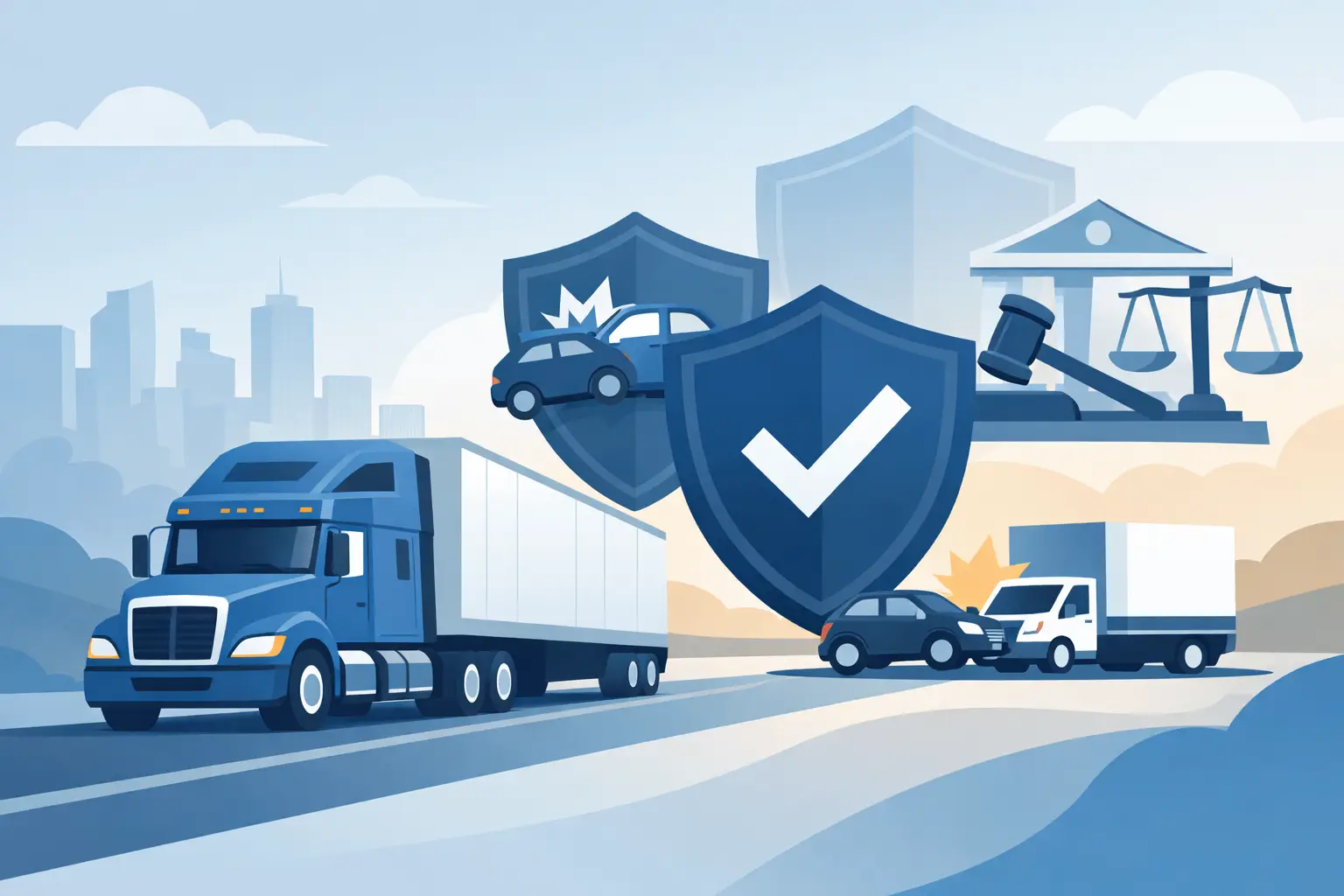
Say your driver is hauling a dry van through an intersection. While making a right turn, the trailer tracks into an adjacent lane and strikes a car. The car’s driver needs medical treatment, the vehicle is heavily damaged, and the driver later misses work.
Primary liability is the policy that responds to the other driver’s injury and vehicle-damage claim if your operation is found liable. If the accident damages a traffic signal or storefront, that property damage may also fall under the liability claim.
The coverage follows the business risk created when your truck is on the road. That is why brokers, shippers, terminals, and customers regularly ask for a certificate of insurance showing your primary liability limits.
Why it is called “primary” liability
“Primary” means this coverage sits first in line for covered third-party claims. It is the foundation of a commercial trucking insurance program, not an optional add-on for most for-hire carriers.
Interstate motor carriers must meet federal financial-responsibility requirements based on what they haul and where they operate. Many general freight carriers are required to carry at least $750,000 in public liability. Carriers hauling certain hazardous materials may need $1 million or $5 million. State rules, contracts, ports, brokers, and shippers can require more than the federal minimum.
For that reason, a $750,000 policy may satisfy the legal baseline but still fail a broker’s onboarding requirement. Many freight opportunities call for $1 million in primary liability. The right limit depends on your freight, lanes, contracts, equipment, safety history, and the level of risk your business can reasonably absorb.
A certificate only proves that coverage is in force on the date issued. It does not expand the policy. Before you accept a load based on a COI requirement, make sure your actual policy limit, operating radius, vehicle schedule, and commodity classification support the work.
What primary liability does not cover
This is where new authorities often get surprised. Primary liability protects others when you cause covered injury or damage. It generally does not pay to repair your own truck, replace your own cargo, or cover every expense that follows an accident.
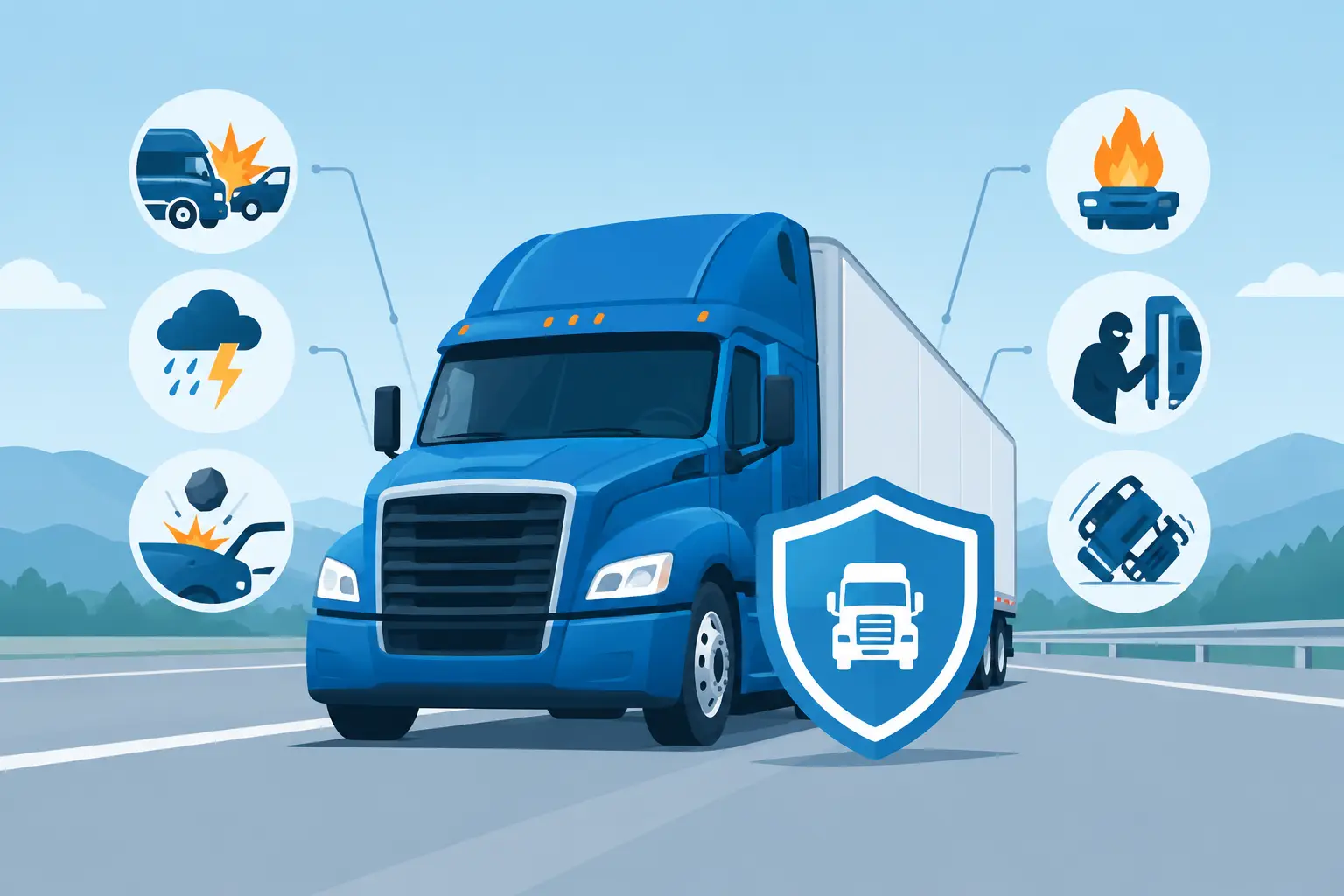
Your tractor, trailer, and attached equipment are usually handled under physical damage coverage, such as collision and comprehensive. If your truck rolls over and the cab is damaged, primary liability is not the policy that repairs it.
The freight you are hauling is normally addressed by motor truck cargo coverage. If a reefer breaks down, freight is stolen, a load is contaminated, or pallets are damaged in transit, cargo coverage is the policy to review. Cargo claims can have exclusions and special requirements, particularly for high-value freight, temperature-controlled goods, autos, household goods, or specific commodities.
Primary liability also does not replace workers’ compensation or occupational accident coverage for your driver’s on-the-job injury. It does not automatically pay for downtime, lost revenue, roadside repairs, trailer interchange exposure, or a customer’s property while it is in your care for reasons unrelated to an auto accident.
A simple way to remember it: liability is for the people and property outside your truck that your operation harms. Physical damage is for your equipment. Cargo is for the load.
The limits matter as much as the coverage
A policy limit is the maximum amount available for a covered loss, subject to the policy language. A major commercial-truck accident can exceed $1 million faster than many owners expect. Multiple injured people, emergency care, surgery, extended recovery, litigation, and damage to several vehicles can create a large claim.
That does not mean every carrier should automatically buy the highest possible limit. Insurance cost is real, especially for a new authority managing cash flow. But choosing the minimum solely because it is cheaper can close doors with better brokers and expose the business to more risk.
Start with the requirements you must meet, then look at your actual operation. Long-haul interstate work, congested metro lanes, passenger-car exposure, heavy equipment, and higher-risk commodities can all change the conversation. A local dump truck operation may face different risks than an auto hauler crossing several states, but neither operation is low-stakes when a serious accident occurs.
For some businesses, an umbrella or excess liability policy may be worth considering once primary limits are in place. This is additional protection above the underlying liability policy, and it may be requested by larger contracts. It is not a substitute for having the required primary liability coverage.
Coverage depends on the details of your operation
Commercial trucking policies are built around details that can seem minor until a claim or audit brings them forward. Your policy may be affected by the drivers listed, vehicles scheduled, operating radius, garaging location, commodities, use of trailers, and whether you run under your own authority or are permanently leased to another carrier.
Adding a driver without telling your agent, running farther than your stated radius, or hauling a commodity outside the policy’s appetite can create problems when you need coverage most. The same goes for buying a policy based on general freight and then moving into a specialized operation without updating it.
Owner-operators leased to a motor carrier need to understand whose primary liability applies while dispatched under that carrier’s authority. The answer can depend on the lease, trip status, policy terms, and whether you are operating under your own authority at the time. Do not assume that a carrier’s policy covers every use of your truck, including non-trucking or bobtail driving.
There is also a federal endorsement often associated with interstate trucking, commonly called the MCS-90. It supports federal financial-responsibility obligations in certain situations, but it is not the same as broad insurance coverage for every loss. The endorsement can create obligations for an insurer and may allow reimbursement from the motor carrier in some circumstances. It should never be treated as a reason to ignore exclusions, classifications, or policy conditions.
How to keep your liability protection working
The best time to review liability is before a claim, a new contract, or a renewal notice. Confirm that every power unit is properly scheduled, every regular driver is disclosed, and your business description matches the work you are actually doing.
When a broker or shipper requests a COI, compare their requirements with your declarations page instead of guessing. If you are adding a truck, hiring a driver, changing states, hauling a new commodity, or taking on Amazon-related or power-only work, notify your insurance team before the first dispatch when possible.
It also pays to report accidents quickly and preserve the details. Get photos, driver statements, police-report information, dashcam footage, witness contacts, and load documents. Never admit fault at the scene. Focus on safety, cooperate with law enforcement, and get the claim reported so the carrier can begin investigating while facts are fresh.
At MC Truck Insurance, we look at primary liability the way truckers do: as a requirement that has to work when the road gets expensive. We can compare carrier options around your routes, drivers, equipment, and freight instead of treating your operation like a generic business account.
Before your next load, look past the certificate and ask one practical question: if your truck causes a serious accident tomorrow, does your current liability policy match the work you are asking it to do?